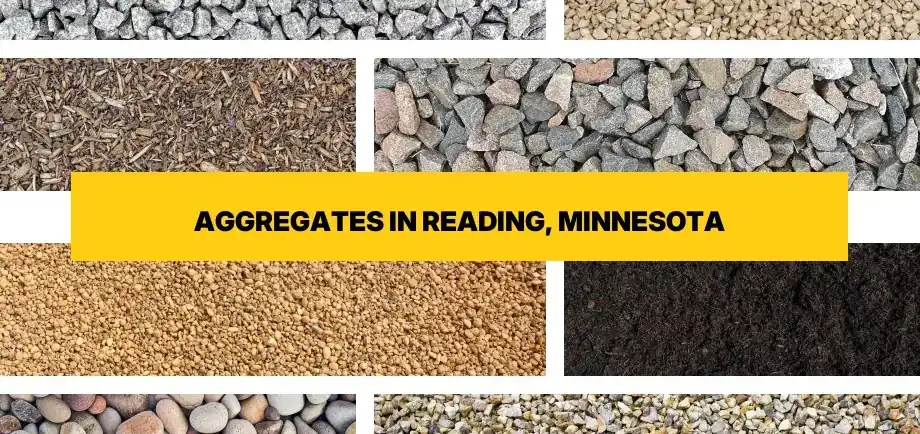
Shop Sand, Stone & Gravel in Reading, Minnesota
Local Topsoil, Dirt, Sand, Rocks and Gravel near me in Reading, Minnesota
Shop Aggregates for Delivery in Reading
Order online for free delivery to any Reading address.


Gravel Monkey is your trusted source for premium gravel and aggregate delivery in Reading, Minnesota. Whether you are upgrading a rural driveway, managing farm drainage, or completing construction projects in this southwestern Minnesota community, we deliver high-quality aggregates directly to your property with absolutely free delivery. Serving Reading and surrounding areas including Wilmont, Worthington, Adrian, and Bigelow, we understand the unique challenges of working with the clay-rich prairie soil and extreme seasonal changes that define Nobles County.
Complete Range of Aggregates and Materials in Reading
Reading properties require durable aggregates that can withstand Minnesota's harsh climate. We offer a comprehensive selection of materials specifically suited for southwestern Minnesota conditions:
- Driveway Gravel - Heavy-duty material for farm and residential driveways
- 3/4 inch Crushed Stone - Versatile aggregate for multiple applications
- #57 Stone - Industry-standard drainage and construction material
- Crusher Run - Superior compaction for stable base layers
- Road Base - Professional-grade foundation material
- Drain Rock - Essential for managing water in clay soils
- Pea Gravel - Decorative stone for pathways and beds
- River Rock - Natural aesthetic for residential projects
- Walkway Gravel - Perfect for garden paths and trails
- Topsoil - Rich soil for gardens and lawns
- Fill Dirt - Essential for grading and leveling
- Crushed Concrete - Eco-friendly recycled aggregate
- Mason Sand - Fine sand for masonry projects
- Playground Sand - Safe, clean sand for play areas
- Washed Sand - Multi-purpose clean sand
- Decomposed Granite - Natural pathway surface material
Free Aggregate Delivery Throughout Reading and Nobles County
Reading sits in the heart of Minnesota's agricultural region, where reliable access to quality aggregates is essential for maintaining rural infrastructure. Gravel Monkey provides completely free delivery to every corner of Reading and the surrounding communities. Our service area encompasses the entire region, ensuring farms, residential properties, and commercial sites receive materials when they need them.
The Reading area's glacially-deposited clay loam soil presents unique challenges for construction and drainage projects. With annual precipitation averaging 27 inches and temperature swings from below zero in January to the upper 80s in July, your aggregates must handle freeze-thaw cycles while providing adequate drainage. Our materials are selected specifically to perform well in these demanding conditions.
Communities We Proudly Serve Near Reading
Our delivery network extends throughout southwestern Minnesota, including:
- Wilmont - Just 5 miles west, serving farms and residential properties
- Worthington - 12 miles east, the Nobles County seat
- Adrian - 10 miles south, along Highway 91
- Bigelow - 8 miles north, rural agricultural community
- Ellsworth - 15 miles southeast near Rock County line
- Rushmore - 7 miles northeast along Highway 59
Choosing the Right Aggregates for Reading Projects
Understanding which aggregate material works best for your specific Reading project ensures long-lasting results that withstand Minnesota's challenging climate. Let's explore the optimal applications for each material type.
Driveway and Road Construction Aggregates
Reading's rural character means many properties have long driveways that endure heavy use from agricultural equipment, delivery trucks, and daily vehicle traffic. The foundation of any durable driveway starts with proper aggregate selection. Crusher run provides exceptional compaction and creates an incredibly stable base that resists rutting even under substantial weight. This material contains a blend of stone sizes that lock together when compacted, creating a solid foundation.
For the surface layer, three-quarter inch crushed stone offers excellent drainage while providing a smooth, firm driving surface. The angular edges of crushed stone interlock effectively, preventing the material from shifting or spreading under traffic. Many Reading property owners appreciate how these aggregates handle spring thaw conditions, when poorly constructed driveways turn into muddy messes.
Road base serves as an excellent choice for longer rural driveways and private farm roads. This engineered aggregate contains precisely sized stones and fines that compact to near-concrete hardness while still allowing water to percolate through. The result is a stable, all-weather surface that stands up to Minnesota's extremes.
Drainage Solutions for Clay-Rich Soil
Reading sits atop glacial till deposits that resulted in the clay-heavy soils characteristic of southwestern Minnesota prairie regions. These soils have poor natural drainage, making proper aggregate selection critical for foundation drainage, French drains, and water management systems. Number 57 stone consists of stones approximately three-quarter inch in size with minimal fines, creating void spaces that allow rapid water movement.
Drain rock specifically addresses the drainage challenges presented by clay soil. Its clean, uniform size allows water to flow freely while preventing the fine clay particles from washing into and clogging the drainage system. For properties near the Kanaranzi Creek watershed or areas with high water tables, proper drainage aggregate installation can prevent basement flooding and foundation damage.
Decorative Aggregates for Residential Beauty
While functionality remains paramount in agricultural Reading, residential properties also benefit from attractive aggregate applications. Pea gravel creates beautiful, low-maintenance pathways and decorative bed covers that complement Minnesota prairie plantings. Its smooth, rounded stones are comfortable underfoot and provide natural weed suppression.
River rock adds visual interest to garden features, dry creek beds, and foundation plantings. Available in various sizes, these naturally tumbled stones bring an organic aesthetic to Reading properties. Decomposed granite offers another attractive option for pathways and patio areas, compacting into a relatively firm surface while maintaining a natural appearance that suits the rural character of the community.
| Aggregate Type | Best Applications | Drainage Rating | Compaction Level |
|---|---|---|---|
| Crusher Run | Driveway base, roads, parking areas | Good | Excellent |
| 3/4" Crushed Stone | Driveway surface, foundations, general use | Excellent | Very Good |
| #57 Stone | French drains, pipe bedding, drainage | Excellent | Good |
| Road Base | Heavy-duty roads, farm lanes | Good | Excellent |
| Drain Rock | Foundation drains, water management | Excellent | Fair |
| Pea Gravel | Walkways, decorative beds, patios | Very Good | Fair |
| River Rock | Landscaping, water features, accents | Good | Poor |
| Decomposed Granite | Pathways, patios, natural surfaces | Fair | Good |
Working with Reading's Unique Soil and Climate
Understanding Reading's geological and climatic conditions helps ensure your aggregate projects succeed long-term. The town sits in the Des Moines Lobe region, formed by the last glacial advance approximately 12,000 years ago. This glaciation deposited the fine-grained till that created Reading's agriculturally productive but drainage-challenged soils.
Soil Composition and Aggregate Performance
The predominant soil types around Reading include Nicollet clay loam and Webster clay loam, both classified as poorly drained prairie soils. These soils contain 30-40% clay content, causing them to expand when wet and contract during dry periods. This expansion-contraction cycle, combined with freeze-thaw action, creates significant challenges for structures and surfaces built directly on native soil.
Proper aggregate base installation mitigates these soil movement issues. A minimum 6-inch layer of compacted crusher run or road base creates a stable platform that distributes loads and prevents differential settling. The aggregate layer acts as a buffer, allowing moisture to drain away rather than accumulating in the fine-textured soil below.
Climate Considerations for Aggregate Projects
Reading experiences a humid continental climate with cold, snowy winters and warm, humid summers. January temperatures average 13°F, while July averages 73°F, creating a temperature range of 60 degrees between seasonal extremes. This dramatic temperature fluctuation drives intense freeze-thaw cycling.
Water trapped in soil or aggregates expands approximately 9% when it freezes. This expansion creates enormous pressure that can heave foundations, crack concrete, and disrupt poorly-designed aggregate installations. Using properly-draining aggregates like number 57 stone, drain rock, and three-quarter inch crushed stone prevents water accumulation, thereby preventing frost heaving and ice lens formation.
Spring thaw presents another challenge. As frozen ground thaws from the surface down, water cannot percolate into still-frozen subsoil. This creates saturated conditions that turn improperly constructed surfaces into impassable mud. Well-drained aggregate bases maintain their structural integrity during thaw, allowing continued access and preventing rutting damage.
Common Aggregate Applications in Reading
Reading's mix of agricultural operations, residential properties, and rural businesses creates diverse demand for quality aggregates. Understanding typical project types helps property owners plan effectively.
Agricultural and Farm Infrastructure
Farm operations throughout the Reading area require durable aggregates for various applications. Feedlot surfaces benefit from crusher run or crushed concrete, which provide firm footing for livestock while managing moisture. These materials resist compaction from constant animal traffic and can be periodically topped or regraded as needed.
Equipment storage areas and machinery yards need surfaces that support heavy loads without rutting or settling. Road base creates an industrial-strength foundation topped with three-quarter inch crushed stone for a firm, level surface. This combination withstands the weight of modern agricultural equipment and provides a clean, mud-free work environment.
Agricultural drainage tile systems require proper aggregate backfill to function effectively. Number 57 stone or drain rock surrounds drainage tile, allowing water to enter freely while preventing fine soil particles from clogging perforations. Proper aggregate selection around drainage tile extends system life and maintains effectiveness.
Residential Driveways and Pathways
Reading homeowners appreciate aggregate driveways for their durability and lower cost compared to asphalt or concrete. A typical gravel driveway installation begins with excavating 8-12 inches of native soil, followed by 6 inches of compacted crusher run as a base layer, then topped with 2-3 inches of three-quarter inch crushed stone for the driving surface. This multi-layer approach creates a driveway that remains stable through all seasons.
Walkway gravel and pea gravel create attractive, functional pathways around homes and gardens. These smaller aggregates provide comfortable walking surfaces while allowing rainwater to percolate naturally into the ground. For high-traffic areas like paths from driveways to front doors, compacted decomposed granite offers a firmer surface that resists displacement while maintaining a natural appearance.
Water Management and Erosion Control
Managing water flow across Reading properties protects structures and preserves land value. French drain installations using drain rock or number 57 stone intercept groundwater before it reaches foundations. These drainage systems work particularly well in Reading's clay soils, where natural drainage is virtually nonexistent.
Erosion control along drainage ditches, creek banks, and slopes requires appropriate aggregate armoring. River rock and larger crushed stone dissipate water energy, preventing soil erosion while allowing controlled water flow. These installations are particularly important during spring snowmelt and heavy summer thunderstorms typical of southwestern Minnesota.
Aggregate Installation Best Practices for Reading
Proper installation techniques ensure your aggregate investment performs well for years. While Gravel Monkey delivers premium materials, following sound installation practices maximizes results.
Site Preparation Essentials
Begin any aggregate project by removing existing vegetation, topsoil, and organic matter. Organic material decomposes over time, creating voids that lead to settling and surface depressions. Excavate to stable subsoil, typically 8-12 inches deep for driveways and parking areas.
Grade the excavated area to promote drainage away from structures. A minimum 2% slope (2 feet of fall per 100 feet of length) ensures water sheds rather than ponding. In Reading's clay soils, consider installing perforated drain pipe along the edges of driveways or parking areas to intercept subsurface water before it saturates the aggregate base.
Geotextile Fabric Benefits
Installing geotextile fabric between native clay soil and aggregate base layers provides multiple benefits. The fabric prevents clay from migrating upward into the aggregate, which would gradually reduce drainage effectiveness. It also distributes loads more evenly across soft subsoil, reducing the risk of differential settling. For Reading's clay-rich conditions, geotextile fabric represents inexpensive insurance for long-term performance.
Proper Compaction Techniques
Compaction transforms loose aggregate into a solid, stable surface. Compact base materials like crusher run and road base in 3-4 inch lifts using a plate compactor or roller. Attempting to compact thick layers in one pass leaves uncompacted material in the middle, creating future settling problems. Add water sparingly during compaction to achieve optimal density—the aggregate should be slightly damp but not saturated.
Surface layers of three-quarter inch crushed stone or pea gravel require less aggressive compaction to maintain some texture and prevent over-hardening. A few passes with a lighter compactor or even vehicle traffic will naturally settle these materials into place.
Seasonal Considerations for Aggregate Projects
While we deliver aggregates year-round to Reading, understanding seasonal impacts helps you plan projects for optimal results.
Spring Installation Advantages
Spring offers excellent conditions for aggregate installation in Reading once the ground fully thaws, typically by late April. Soil moisture levels are high but controlled, making excavation easier while still allowing proper compaction. Completing projects in spring provides time for aggregates to settle naturally before winter freeze-thaw cycles begin.
Summer and Fall Work
Summer's warm, dry conditions facilitate efficient compaction and minimize mud issues during installation. However, summer thunderstorms can create temporary challenges with saturated clay soils. Plan projects with contingencies for weather delays. Fall represents another excellent installation window, particularly September and October when temperatures moderate but the ground remains unfrozen.
Winter Limitations and Emergency Repairs
Frozen ground limits excavation and compaction effectiveness during Reading's winter months. However, emergency access repairs and surface maintenance remain possible. Top-dressing existing aggregate surfaces with crusher run or three-quarter inch crushed stone addresses winter rutting and provides improved traction through snow and ice season.
Estimating Aggregate Quantities for Reading Projects
Accurate material estimates prevent shortages and excess waste. Understanding calculation methods helps you order appropriate quantities.
Basic Calculation Formula
Calculate aggregate volume in cubic yards using this formula: Length (feet) × Width (feet) × Depth (inches) ÷ 324 = Cubic Yards needed. For example, a driveway measuring 50 feet long by 12 feet wide with 4 inches of aggregate requires: 50 × 12 × 4 ÷ 324 = 7.4 cubic yards.
Most aggregates weigh approximately 1.4 tons per cubic yard, so multiply cubic yards by 1.4 to determine tons needed. The example driveway would require approximately 10.4 tons of material. Our delivery team can help verify your calculations and ensure you receive adequate material for your Reading project.
Accounting for Compaction and Settling
Base materials like crusher run and road base compact significantly, reducing volume by 20-30%. Order extra material to account for compaction—generally add 25% to your calculated amount for base layers. Surface materials compact less dramatically but still benefit from ordering slightly more than calculated to ensure complete coverage.
Serving All Reading Neighborhoods and Rural Areas
Reading's compact town layout and surrounding agricultural lands all receive our delivery service. Whether your project is on a Main Street property in town, a farmstead along County Road 35, or a rural acreage near the Nobles County line, we bring aggregates directly to your site.
The Reading School District area, encompassing both the town and surrounding townships, represents our core service territory. Properties along Highway 266 running east-west through Reading enjoy easy access for delivery trucks. Rural routes extending north toward Bigelow, south toward Adrian, and west toward Wilmont all receive regular service.
Many Reading-area farms access their properties via section line roads, which may have weight restrictions during spring thaw. Our delivery team understands local road conditions and can coordinate deliveries to ensure materials arrive safely without damaging rural infrastructure.
Sustainable Aggregate Choices for Reading
Environmental stewardship matters to Reading's agricultural community. We offer eco-friendly aggregate options that reduce environmental impact while delivering excellent performance.
Recycled Concrete Aggregates
Crushed concrete diverts construction waste from landfills while providing a cost-effective alternative to virgin stone. This recycled aggregate compacts well and performs excellently as driveway base, parking lot subbase, and general fill material. Its slightly lighter color compared to natural stone can actually help keep surfaces cooler during summer heat.
Natural Drainage and Groundwater Recharge
Properly designed aggregate surfaces allow rainwater and snowmelt to percolate into groundwater rather than running off into ditches and streams. This natural infiltration recharges aquifers, reduces erosion, and maintains base flow in local waterways. Using permeable aggregates like three-quarter inch crushed stone, pea gravel, and drain rock supports sustainable water management on Reading properties.
Why Reading Chooses Gravel Monkey for Aggregate Delivery
Our commitment to Reading extends beyond simply delivering materials. We provide expertise, reliability, and service that southwestern Minnesota property owners depend on.
Local Knowledge and Experience
We understand Reading's unique challenges—the clay soils, extreme weather, agricultural demands, and rural access issues. This knowledge informs our material recommendations and delivery practices, ensuring you receive aggregates suited to local conditions delivered efficiently to your site.
Quality Materials at Competitive Prices
Our aggregates meet rigorous quality standards for size, cleanliness, and composition. We source materials that perform reliably in Minnesota's demanding climate. Combined with our free delivery policy, you receive exceptional value without compromising on quality.
Flexible Scheduling and Reliable Service
Farm operations, construction schedules, and weather all influence project timing. We work with your schedule to deliver aggregates when you need them. Our reliable service means you can plan confidently, knowing materials will arrive as promised.
Expert Guidance and Support
Unsure which aggregate suits your project? Our team provides expert recommendations based on your specific application, soil conditions, and budget. We help you avoid costly mistakes and ensure first-time success on your Reading project.
Frequently Asked Questions About Gravel and Aggregates in Reading
We deliver a comprehensive range including driveway gravel, crushed stone, #57 stone, pea gravel, river rock, crusher run, road base, drain rock, topsoil, fill dirt, various sands, crushed concrete, and decomposed granite throughout Reading and surrounding Nobles County areas.
Yes! Gravel Monkey offers FREE delivery to Reading and the surrounding southwestern Minnesota area for all gravel and aggregate orders. We service the entire Nobles County region.
The amount depends on your project size and type. For driveways, calculate length times width times depth in feet, typically 4 inches deep. For a standard two-car driveway (50 feet by 12 feet), you'll need approximately 8 to 10 tons of material. Our team can help you calculate the exact amount for your Reading property.
For Reading's climate, crusher run and three-quarter inch crushed stone provide excellent drainage and resist frost heaving. These materials compact well while allowing moisture to drain, preventing the freeze-thaw damage common in Minnesota winters.
Absolutely! We deliver to all areas in and around Reading, including rural properties, farms, and acreages throughout Nobles County. Our trucks are equipped to handle various terrain conditions typical of southwestern Minnesota.
Road base and crusher run are excellent choices for Reading driveways. They provide superior compaction and stability, which is critical for withstanding heavy agricultural equipment and Minnesota's seasonal changes. These materials create a solid foundation that resists rutting and erosion.
Reading sits on clay-rich prairie soil that holds water. Use drain rock or #57 stone for French drains and foundation drainage. These aggregates allow water to flow freely away from structures, preventing basement moisture and foundation issues common in clay soils.
Late spring through early fall offers ideal conditions in Reading. The ground is workable, and materials have time to settle before winter. However, we deliver year-round to accommodate urgent projects and seasonal construction schedules.
Get Your Free Aggregate Delivery in Reading Today
Ready to start your project with premium aggregates delivered free to your Reading property? Gravel Monkey makes it easy to get the materials you need when you need them. Our team stands ready to answer questions, provide expert recommendations, and schedule your delivery.
From agricultural operations to residential improvements, from drainage solutions to decorative landscaping, we supply the aggregates that make Reading projects succeed. Experience the difference that quality materials, local expertise, and reliable service make for your southwestern Minnesota property.
Contact us today to discuss your project needs and arrange free delivery of premium aggregates to your Reading location. We look forward to serving you!

Need help? Reach out for a quote: