3/8″ Crushed Concrete
From $625.00
Supplied locally near you
“Seamless shopping, from click to delivery—never knew it could be so straightforward.”
- Free Dump Truck Delivery Service
- Unmatched Value: Premium Quality at Competitive Prices
- Consistent, On-Time Delivery to Your Neighborhood



Crushed Concrete Calculator
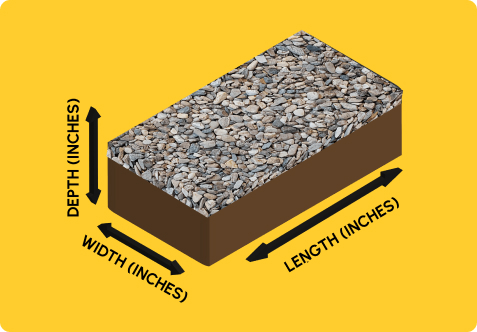
Enter your project dimensions to estimate how much crushed concrete you will need.
Specification Information
Gravel Monkey recommends:
- Orders of 4 tons or under – increase your estimated needed amount by 20%.
- Orders over 4 tons – increase your estimated needed amount by 10%.
3/8″ crushed concrete is a fine recycled aggregate designed for walkways, patios, bedding layers, and light-use landscaping projects. It offers eco-friendly durability with a smoother, more refined finish.
“A sustainable, compactable material that blends affordability with versatility for small-scale projects.”
Quantity Calculator
Use our project calculator to determine how much 3/8″ crushed concrete you’ll need. Enter the length, width, and depth of your project area. For accuracy, add 5-10% extra to account for compaction and settling.
3/8″ Crushed Concrete: What You Need to Know
This material is produced by processing reclaimed concrete into small, angular fragments approximately 3/8 of an inch in size. The fine profile allows for tight compaction, creating a smooth, stable surface ideal for pedestrian pathways, bedding layers, and light-duty bases.
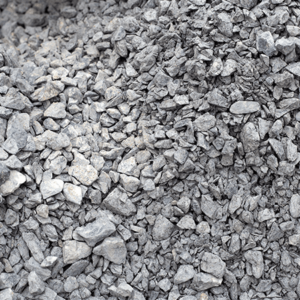
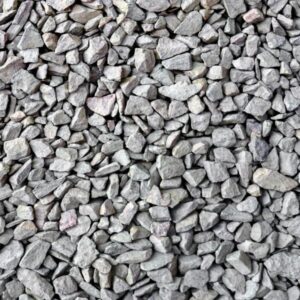
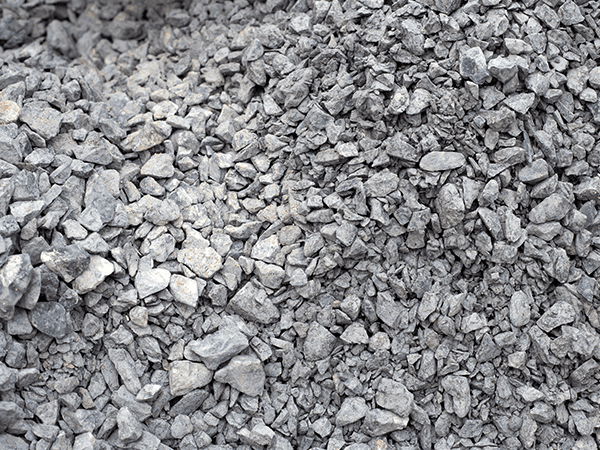
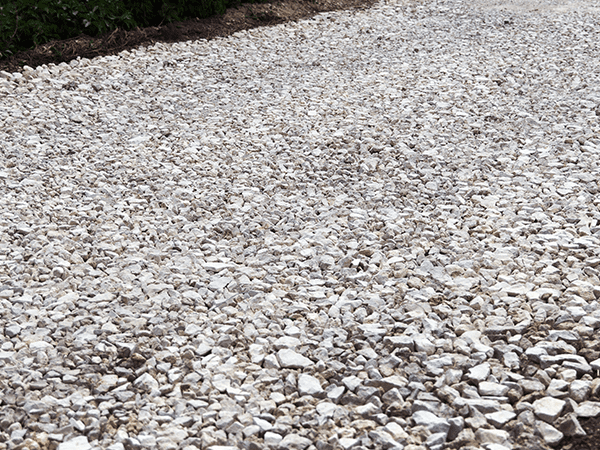
Compared to larger crushed concrete (like 1″-1½″ or 2″-3″), this size prioritizes walking comfort, leveling ability, and finish detail over heavy structural strength. Its color is typically light to medium gray, sometimes speckled with mortar or brick particles, giving it a natural, utilitarian look.
Why It Works for You: Applications & Versatility
- Walkways & Garden Paths – Creates a smooth, compacted surface for foot traffic.
- Paver Bedding & Patio Bases – Excellent as a leveling layer under pavers, flagstone, or brick.
- Driveway Topping – Adds traction and fills voids over coarser base aggregates.
- Utility Trench Backfill – Protects and stabilizes non-sensitive utility lines.
- Drainage Zones – Works in French drains, swales, or perimeter systems when installed clean and open-graded.
- Landscape Borders & Beds – Provides a tidy, finished look while suppressing weeds.
Key Benefits of 3/8″ Crushed Concrete
- Eco-Friendly Choice – Recycles old concrete, reducing landfill waste and conserving quarry resources.
- Compactable Surface – Small, angular pieces interlock tightly, forming a smooth walking layer.
- Excellent for Detail Work – Fits into narrow joints, gaps, and forms for clean finishes.
- Drainage-Friendly – When washed, it allows water to flow through while preventing soil migration.
- Budget-Smart – Typically cheaper than virgin stone while still offering reliable performance.
- Low Maintenance – Once compacted, it stays stable with minimal topping.
Installation Know-How: Step by Step
- Excavate & Prep
Clear vegetation, topsoil, and loose soil. Grade subgrade slightly for water runoff. - Add Base (If Needed)
For structural builds, place 3-4 inches of larger crushed concrete or gravel as a base layer. - Apply Geotextile (Optional)
Use fabric to reduce weed growth and keep soil from mixing with the aggregate. - Spread 3/8″ Crushed Concrete
Lay 2-3 inches evenly with a rake or shovel. - Compact Thoroughly
Use a plate compactor or hand tamper to lock pieces in place. - Finish & Edge
Install edging (timber, steel, or stone) for clean lines and to prevent migration.
Common Mistakes to Avoid
- Using Alone for Heavy Loads – Too fine to serve as a primary base for vehicles.
- Skipping Compaction – Loose stone shifts and creates uneven surfaces.
- Too Thin of a Layer – Less than 2″ coverage won’t provide durability.
- Neglecting Drainage – Flat grading may cause water pooling.
- Mixing with Soil – Without a barrier, soil intrusion reduces stability.
Long-Term Maintenance Tips
- Rake & Re-Level – Smooth out light depressions seasonally.
- Top-Off Every 1-2 Years – Add fresh material to maintain depth and color.
- Weed Control – Spot-treat weeds early or use fabric during installation.
- Clean Surface – Sweep or blow debris to prevent organic buildup.
- Edge Checks – Inspect borders to keep material contained.
Comparing 3/8″ Crushed Concrete to Other Materials
| Material Type | Strength & Load | Drainage | Comfort Underfoot | Maintenance | Visual Style |
| 3/8″ Crushed Concrete | Moderate | Good | Smooth, firm | Low | Neutral, utilitarian |
| 1″-1½″ Crushed Concrete | High | Excellent | Moderate comfort | Low | Neutral, rugged |
| 2″-3″ Crushed Concrete | Excellent | Excellent | Coarse, rugged | Low | Industrial, bold |
| 3/8″ Crushed Gravel | Moderate | Good | Smooth, refined | Low | Clean, natural |
| Pea Gravel (Rounded) | Low | Moderate | Comfortable | Higher | Decorative, casual |
| Decomposed Granite (DG) | Moderate | Good | Smooth, earthy | Moderate | Soft, rustic |
Expert Tips
- Best as a Finish Layer – Use on top of coarser aggregate for a refined walking or patio surface.
- Compact in Thin Lifts – Apply in 2″ layers for tight, stable compaction.
- Order Extra – Fine material settles more than expected, so plan for 5-10% more.
- Use Clean Material – Washed, screened crushed concrete works best for drainage-sensitive projects.
- Blend with Design – Works well in rustic or utilitarian settings; for decorative appeal, combine with edging or mixed stone.
Final Word: Why 3/8″ Crushed Concrete Stands Out
3/8″ crushed concrete is a versatile, eco-friendly material that excels in light-use bases, pathways, and patio projects. Its compactable nature makes it ideal for detail work, while its sustainable origins make it a smart choice for cost- and eco-conscious buyers.
With proper installation and seasonal upkeep, it provides a stable, attractive surface that lasts for years.

I had never ordered gravel before so I was a little anxious but they made it really easy and had great customer service! Super easy to book online and I was able to get quick answers to some questions I had over email too. The delivery was seamless to our rural area and at a good price.
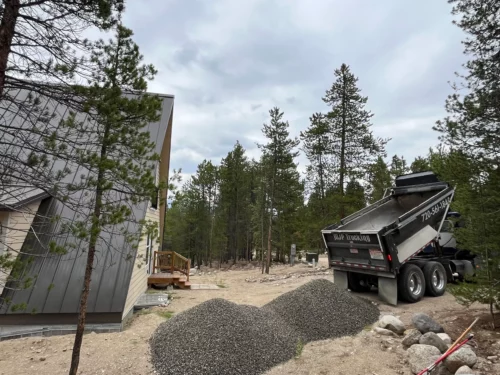
Gravel Monkey is a superb service for your gravel needs. They offer 2 day delivery scheduled on short notice, and they are quick to get your materials out the door on the delivery day. Customer support is also very helpful. Thanks Gravel Monkey!
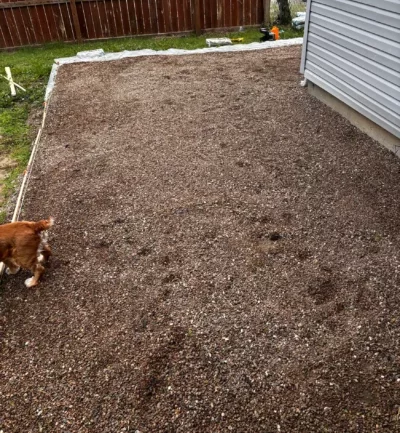
Gravel Monkey made the entire process quick and smooth from start to finish. Their online calculator was especially helpful, it took the guesswork out of determining how much material I needed, and saved me a lot of time. The ordering process was straightforward, and everything was handled efficiently. I highly recommend Gravel Monkey for anyone looking for a hassle-free experience and great customer service.
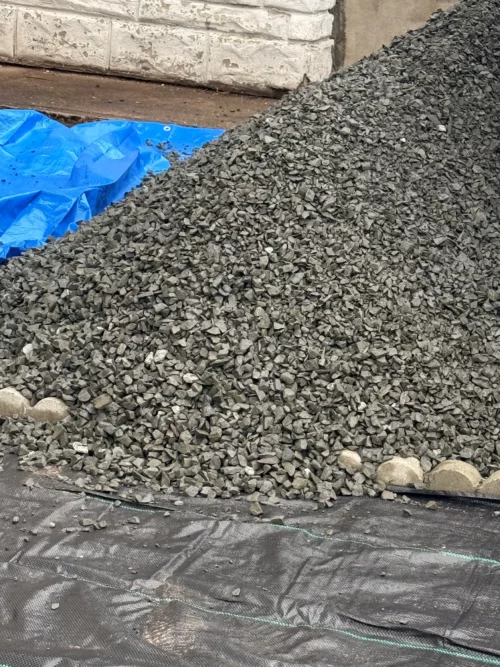
Gravel Monkey had quick turnaround and the local delivery team was very accommodating. The entire process was smooth. Thank you.
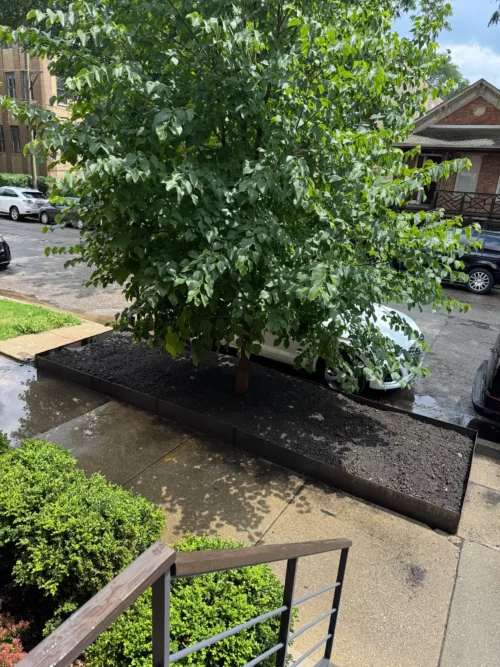
Great prices! Great communication! Fast delivery! Driver put the sand where I asked and it was challenging but he did it like a pro! Super smooth online purchase! Thanks!
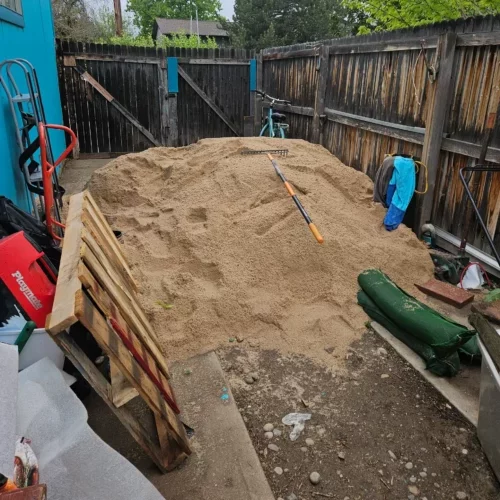
Gravel Monkey has the greatest customer service skills people. Very kind and make accommodation to your needs. Delivery fast and simple.
How much does a yard of crushed concrete weigh?
A cubic yard of crushed concrete typically weighs 2,400 – 2,800 pounds (about 1.2 – 1.4 tons). Weight varies based on moisture, density, and how finely the material is processed. It’s slightly lighter than natural crushed stone because concrete contains air pockets and cement paste.
What size crushed stone goes under a concrete slab?
The best material under a concrete slab is ¾″ clean crushed stone. Its angular shape provides strong support while allowing water to drain, reducing the risk of frost heave and slab shifting. Avoid “minus” products with fines they can trap moisture.
Where can I buy crushed concrete near me?
You can order crushed concrete delivered via dump truck directly from Gravel Monkey, delivered to your home or job site. Simply enter your ZIP code on the product page to confirm availability and choose your delivery date no quarry trips or truck rentals required.
Is crushed concrete good for driveways?
Yes, crushed concrete performs very well for driveways, farm lanes, and parking pads. It compacts tightly, drains efficiently, and offers excellent load-bearing strength. It’s also significantly more affordable than virgin aggregates and is eco-friendly. Many homeowners use it as a base topped with finer gravel.
Will crushed concrete harden?
Crushed concrete does not fully harden like fresh concrete, but it does bind and tighten as it compacts. Residual cement paste helps it firm up more than natural stone, giving it a very stable base. It won’t become a solid slab, but it will become dense and durable over time.
What is crushed concrete used for?
Crushed concrete is used for driveway bases, road foundations, drainage layers, retaining-wall backfill, temporary construction pads, and erosion control. It’s also used as a structural fill or blended into new concrete mixes as a recycled aggregate. Its affordability and strength make it ideal for both residential and commercial projects.
Is crushed concrete environmentally friendly?
Yes. Crushed concrete is a recycled aggregate, which reduces landfill waste and limits the need for mining new stone. It’s one of the most eco-friendly materials for driveways, bases, and drainage applications offering strong performance with a much lower environmental impact.
How much crushed concrete do I need?
Measure your project’s length × width × depth (in feet) and divide by 27 to get cubic yards. For tons, multiply cubic yards by 1.1 – 1.2, since crushed concrete is slightly lighter than natural stone. Driveways usually need 4 – 6 inches of base, while walkways and pads use 2 – 4 inches. Ordering an extra 10 – 20% helps account for compaction and grading.
What does crushed concrete look like?
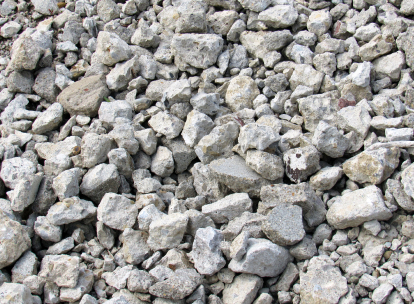
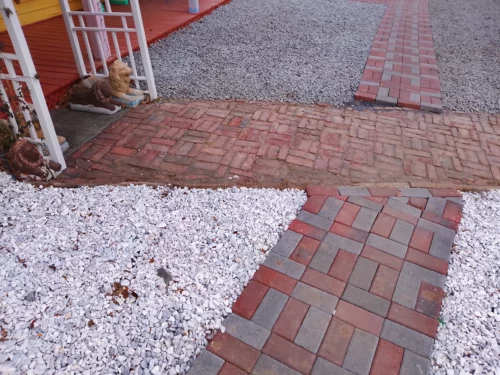
Crushed concrete appears as gray or off-white angular pieces, usually mixed with fine particles from the original concrete. You may see small traces of brick or asphalt, depending on the source, but reputable suppliers screen it well. It looks similar to crushed stone but has a slightly lighter color and a more varied texture.
How many yards is 1 ton of crushed concrete?
Because crushed concrete weighs about 2,400 – 2,800 lbs per yard, one ton equals roughly 0.7 – 0.9 cubic yards. For quick estimating, most projects use 1 ton ≈ 0.75 cubic yards. Moisture and compaction levels can slightly change the exact volume.