What Size Gravel for Drainage?
Drainage problems are rarely caused by water alone. In most cases, they come down to using the wrong gravel product for the job. When water pools near a foundation, washes out soil, or backs up in a trench, the issue is often gravel size, cleanliness, or how the material behaves once installed.
Not all gravel drains well. Some products are designed to compact and lock together, while others are meant to stay open and allow water to move freely. Knowing what size gravel for drainage works best starts with understanding how different gravel products perform in real drainage systems.
Key Takeaways
• Drainage performance depends on gravel size, cleanliness, and shape
• Products like drain rock and clean crushed gravel allow consistent water flow
• Compacted base materials are not suitable for drainage
• Each drainage application requires a specific gravel product
• Correct installation matters as much as choosing the right stone
Understanding Why Gravel Size and Product Type Matter
Water moves through drainage systems via the void space between stones. The size and shape of the gravel directly control how large those voids are and how long they remain open.
Drainage-specific products are washed to remove fines. This is critical. Even a high-quality stone will fail as drainage material if it contains dust or small particles that migrate and clog gaps over time.
When evaluating what size gravel for drainage to use, you are really choosing between structural gravel products and drainage gravel products. Only the latter are appropriate for water movement.
What Size Gravel for Drainage Works Best Overall
For most drainage applications, products in the ¾ inch to 1½ inch range perform best. These sizes provide enough void space for water flow while remaining stable under soil pressure.
Common drainage-friendly products include:
- Drain rock (¾″ – 1½″ clean stone)
- ¾″ Crushed gravel (washed, no fines)
- 1″ – 1½″ Crushed Gravel (clean, angular stone)
These materials are widely used in French drains, foundation perimeters, retaining walls, and subsurface runoff systems.
Products smaller than this range are more likely to compact. Products larger than this range may drain well but can be harder to work with in shallow installations.
How to Use Drainage Rocks Around Foundations
Foundation drainage requires gravel that stays open permanently. The most commonly used product for this purpose is drain rock, typically sized between ¾ inch and 1½ inches.
Drain rock is placed along the footing and often paired with a perforated drain pipe. Its clean, angular structure allows water to move downward quickly and away from the foundation wall.
Using compactable materials such as road base or crusher run around foundations is a common and costly mistake. These products are designed to lock together, which traps moisture instead of releasing it.
Landscape fabric is always recommended when installing drainage gravel near foundations to prevent soil intrusion.
What Size Gravel for Drainage in French Drains
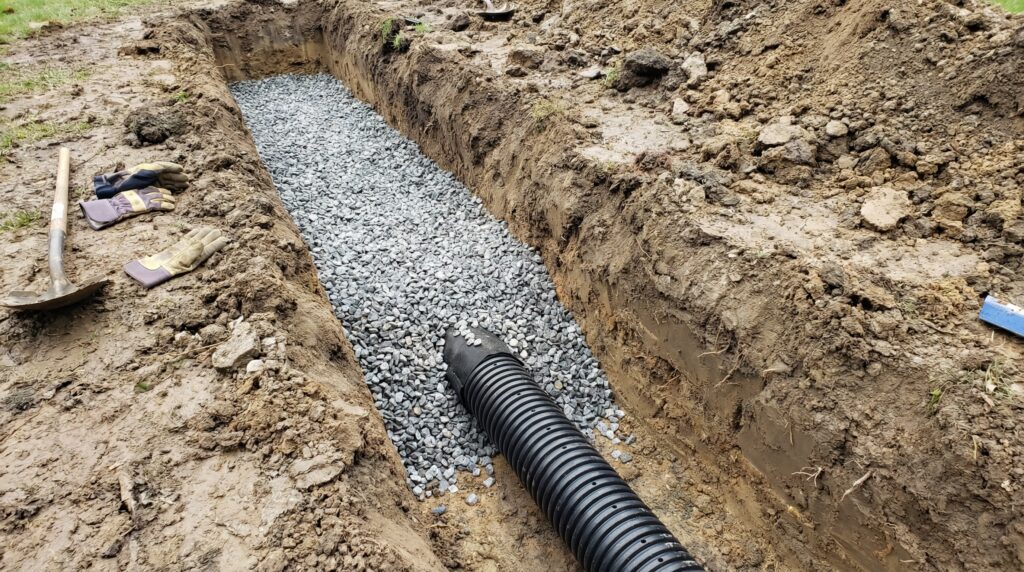
French drains rely entirely on gravel performance. The pipe only collects water; the gravel delivers it.
The most reliable product for French drains is ¾″ clean crushed gravel or drain rock in the same size range. This size:
- Surrounds the pipe evenly
- Allows water to reach perforations from all sides
- Resists clogging over time
Larger products like 1½″ crushed gravel can be used in deeper drains but may require careful placement to avoid pipe movement.
Pea gravel and mixed aggregates should be avoided in French drains due to their tendency to shift and clog.
How to Use Drainage Rocks Under Driveways
Driveway drainage must support vehicle weight while allowing water to escape. This often requires layering different products.
A common approach is:
- Drain Rock or 1″ – 1½″ crushed gravel for subsurface drainage
- Road Base or compacted gravel above for structural support
Using drainage gravel directly under the surface allows water to escape downward instead of freezing beneath the driveway.
Smaller gravel or base materials alone often trap water, leading to frost heave and surface failure.
What Size Gravel for Drainage Behind Retaining Walls
Retaining walls fail primarily due to trapped water. Drainage gravel behind the wall relieves pressure and protects structural integrity.
The most commonly used products here are:
- ¾″ clean crushed gravel
- Drain Rock
Gravel should extend vertically behind the wall, not just at the base. This creates a continuous drainage column that directs water toward outlet pipes.
Using soil, sand, or base gravel behind retaining walls almost always leads to premature failure.
How to Use Drainage Rocks in Landscaping
How to Use Drainage Rocks in Garden and Planter Areas
In landscaping, drainage gravel is often used beneath soil rather than as a surface layer.
Products like ¾″ crushed gravel are commonly placed at the bottom of raised beds or planters to prevent waterlogging. However, gravel should never replace proper soil structure.
In shallow applications, avoid oversized products such as 2 – 3″ crushed gravel, which can create instability and air gaps.
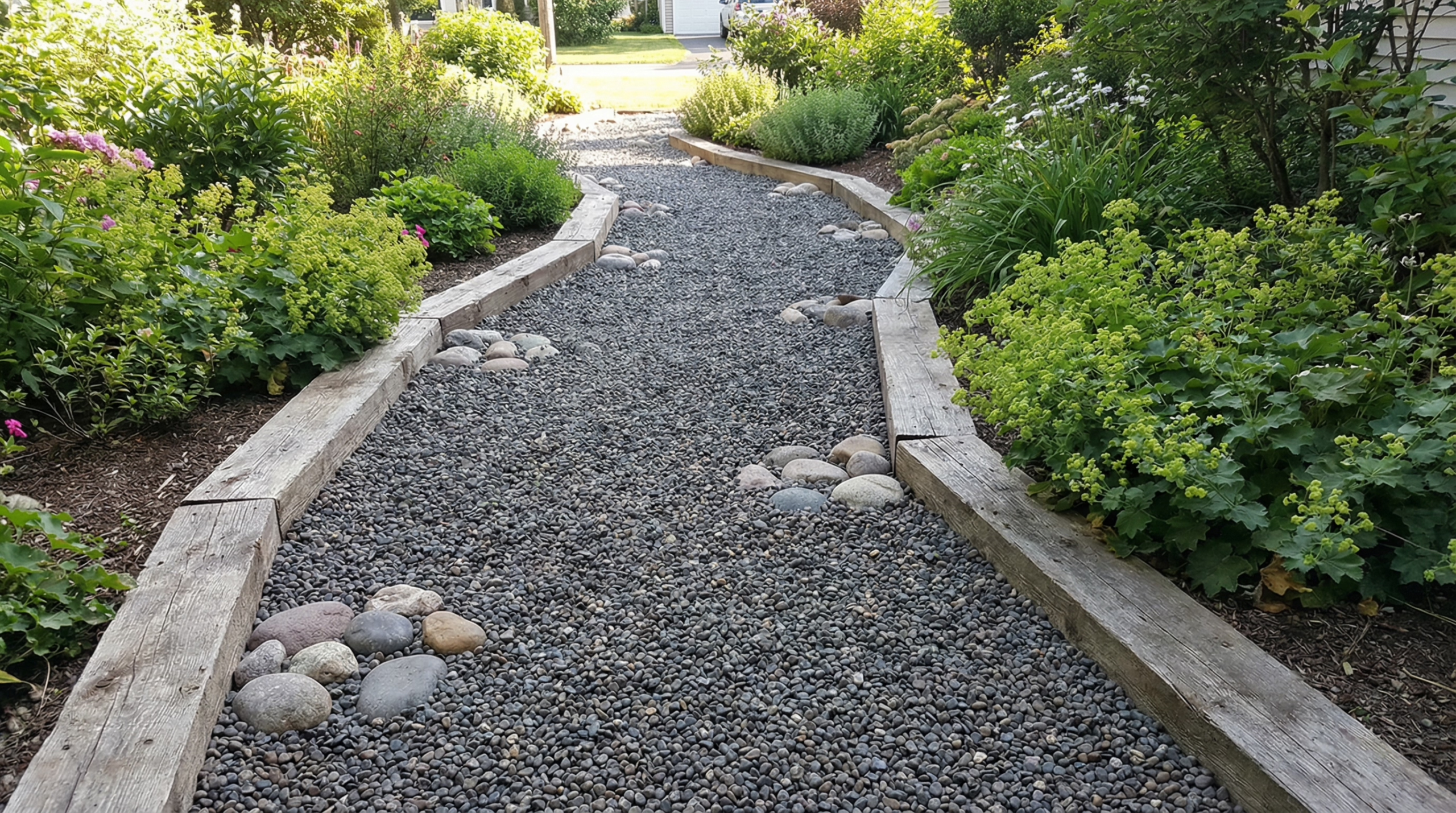
What Size Gravel for Drainage in Dry Creek Beds
Dry creek beds combine drainage and erosion control. Gravel selection depends on expected water flow.
Effective product combinations include:
- 1″ – 1½″ crushed gravel for primary drainage
- 2″ – 3″ crushed gravel or larger stone for anchoring and erosion resistance
Layering different sizes prevents washout while maintaining flow capacity. Uniform small gravel tends to migrate during heavy rain.
Gravel Products That Do Not Work for Drainage
Some commonly available gravel products are unsuitable for drainage:
- Pea Gravel – rounded stones shift and compact
- Crusher Run / Road Base – contains fines that block water
- Decomposed Granite – designed to compact, not drain
These materials are excellent for surfaces and bases but should never be used where water movement is required.

Installation Factors That Matter as Much as Gravel Size
Even the correct drainage product can fail if installed incorrectly. Successful drainage systems require:
- Washed gravel with no fines
- Adequate depth for the application
- Landscape fabric separation
- Proper slope toward discharge points
Ignoring any of these undermines the benefits of using the right gravel product.
Frequently Asked Questions
What is the best gravel product for drainage?
The most reliable products for drainage are drain rock and clean crushed gravel in the ¾″ to 1½″ size range. These products are washed, contain no fines, and maintain open void space for water flow.
Can I use crushed gravel instead of drain rock for drainage?
Yes, crushed gravel can be used for drainage as long as it is washed and free of fines. Products like ¾″ crushed gravel or 1″ – 1½″ crushed gravel perform well in French drains, foundations, and retaining walls when properly installed.
Why shouldn’t I use road base or crusher run for drainage?
Road base and crusher run are designed to compact tightly. They contain fine particles that block water movement, making them unsuitable for drainage applications where water needs to flow freely.
How deep should drainage gravel be installed?
Depth depends on the application. French drains typically require enough gravel to fully surround the pipe, while foundation and retaining wall drainage often needs gravel extending several inches to several feet vertically to relieve water pressure.
Do I need landscape fabric with drainage gravel?
Yes. Landscape fabric is strongly recommended. It prevents soil from washing into the gravel and clogging void spaces, helping drainage systems function properly for many years.
Choosing the Right Drainage Gravel with Confidence
When asking what size gravel for drainage works best, the answer almost always points to clean, angular gravel between ¾ inch and 1½ inches. Products like drain rock and ¾″ crushed gravel exist specifically for this purpose.
Matching the gravel product to the drainage role ensures long-term performance and protects surrounding structures from water damage.