
Best Base for a Gravel Driveway
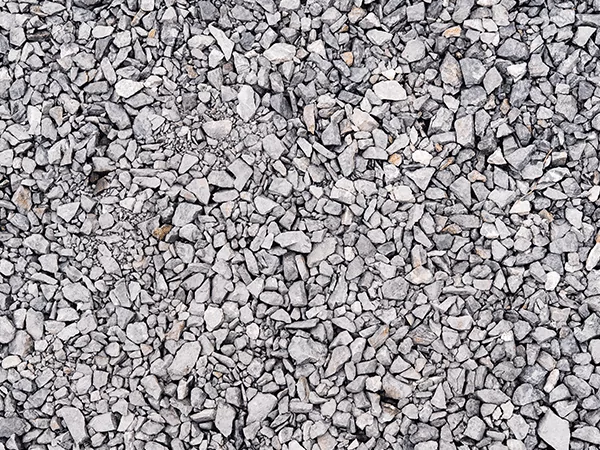
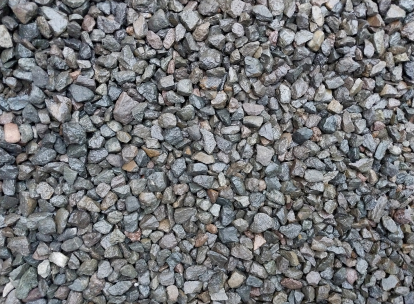
The best base for a gravel driveway is a large angular crushed stone (around 1 to 2 inches, sold in the industry as #3 crushed stone) for the sub-base, laid over geotextile fabric. On top of that goes a layer of crusher run or road base, which mixes smaller stone with stone dust so it compacts into a tight, semi-solid platform. Angular crushed stone is the key in both layers, because the jagged edges interlock under load instead of sliding around like rounded gravel does.
The base is the part nobody sees and the part that decides whether the driveway lasts. The surface gravel gets all the attention, but a bad base is the reason driveways rut, pothole, and sink into the mud. Get the base right and the surface takes care of itself.

The Best Base Materials
Three materials cover almost every gravel driveway base.
Large Crushed Stone (#3 / 1 to 2 inch)
The gold-standard sub-base. Large angular stones that carry the load, drain well, and resist sinking into the soil below. This is the foundation layer everything else sits on. A 1 to 1.5 inch crushed stone is the right size for the bottom of a driveway build.
Crusher Run or Road Base
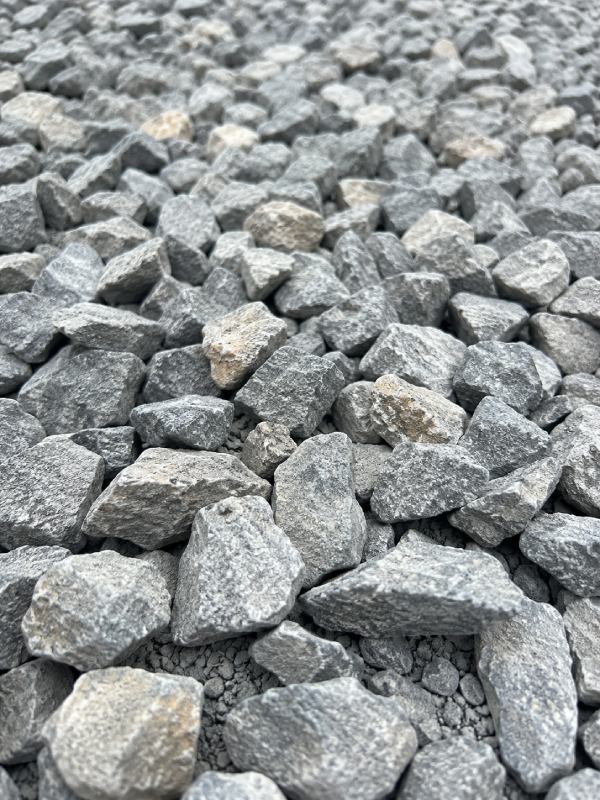
The binding layer that goes on top. It combines angular stone (up to around 3/4 inch) with stone dust fines. When compacted, the fines fill the gaps and lock the layer into a firm surface that won’t shift. Crusher run and road base both do this job and give the base its tight, packed feel.
Crushed Concrete
The budget pick. Recycled and crushed to similar specs as virgin stone, it’s angular, locks together, and performs nearly identically as a base for around 30 to 50% less. Since the base gets covered by the surface anyway, the slightly grayer look doesn’t matter. More in our piece on crushed concrete benefits.
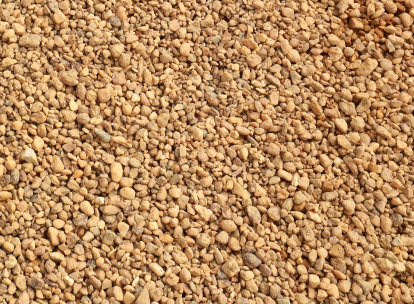
What all three share: angular edges and a mix of stone sizes that compact tightly. That’s the whole job of a base. Keep rounded gravels like pea gravel and river rock out of the base entirely, since they slide instead of lock.
How to Build the Base
A proper base is built in layers, each compacted before the next goes on. Total compacted depth runs around 8 to 12 inches for a residential driveway.
- Prep the subgrade. Strip off topsoil, grass, and roots until you reach firm soil, then compact what’s left.
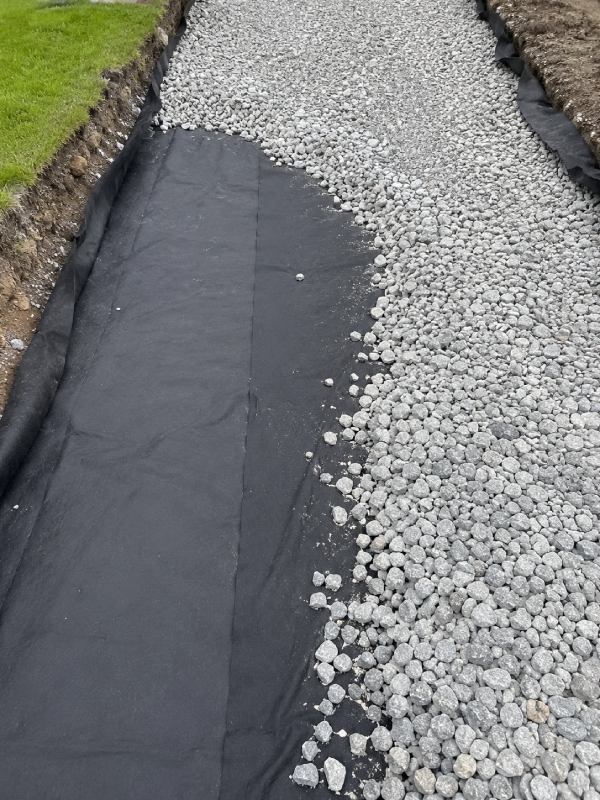
- Lay geotextile fabric. Across the whole excavated area, overlapped at the seams (more on whether you need it below).
- Sub-base. 4 to 6 inches of large crushed stone. This is the structural foundation.
- Base layer. 3 to 4 inches of crusher run or road base. This binds and tightens the top of the base.
- Surface. 2 to 4 inches of your chosen surface gravel goes on last.
How deep the base needs to be depends on what drives on it and what’s underneath:
| Situation | Base depth |
|---|---|
| Passenger cars, good soil | 8 to 12 inches total |
| Heavy vehicles, RVs, delivery trucks | 8 to 10 inch base alone |
| Clay or soft soil | 6 to 8 inch sub-base minimum |
One rule matters more than any other: compact in lifts. Spread and compact the material in 3 to 4 inch layers instead of dumping the full depth and compacting once. Loose gravel that hasn’t been compacted ruts under the first vehicle that drives over it. Quick check: if you can walk across the compacted base without leaving footprints, it’s done.
For the full step-by-step build, see our gravel driveway install guide.
Frequently Asked Questions
What is the best base material for a gravel driveway?
A large angular crushed stone (around 1 to 2 inches, known as #3 in the industry) for the sub-base, topped with crusher run or road base for the binding layer. Both are angular crushed stone, which interlocks under load. Crushed concrete is a solid budget alternative that performs nearly the same.
How thick should a gravel driveway base be?
Around 8 to 12 inches of total compacted depth for passenger vehicles: a 4 to 6 inch sub-base of large crushed stone, a 3 to 4 inch base of crusher run, then the surface gravel. Heavy vehicles or soft clay soil push that toward the deeper end.
Can you put gravel directly on dirt?
Not for a driveway. Gravel dumped on unprepared soil sinks, mixes with the dirt, and ruts under traffic. You need to strip the topsoil, lay fabric, and build a compacted crushed stone base first. Gravel straight on dirt only works for light foot-traffic paths, not anything you drive on.
Do I need fabric under my gravel driveway?
On clay or silty soil, yes, it’s essential. For most other soils it’s strongly recommended as cheap insurance against the base contaminating over time. You can reasonably skip it only on sandy or gravelly, well-draining soil.
Do You Need Landscape Fabric Under the Base?
On clay or silty soil, yes. It’s essential. Clay and silt particles are fine enough to migrate up into the crushed stone under repeated traffic, slowly contaminating the base and weakening it until the surface settles unevenly. Fabric blocks that migration while still letting water drain through. This slow contamination is one of the most common reasons a driveway that started fine turns to mush after a few years.
For most other driveways, fabric is strongly recommended and a cheap insurance. The only place you can reasonably skip it is naturally sandy or gravelly soil that already drains well and has particles too large to pump upward.
Be clear on one thing: fabric is not a base. It stops the soil and stone from mixing, but it carries no load. Laying fabric and dumping gravel on top without a compacted stone base underneath will still rut under vehicles.