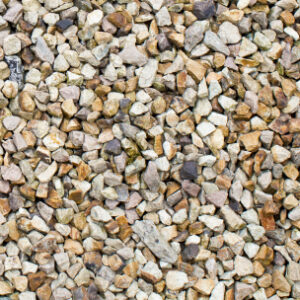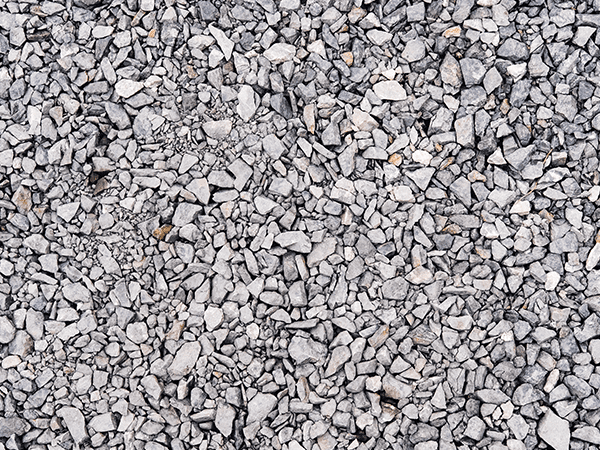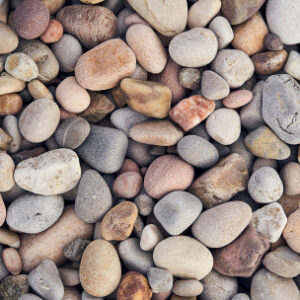
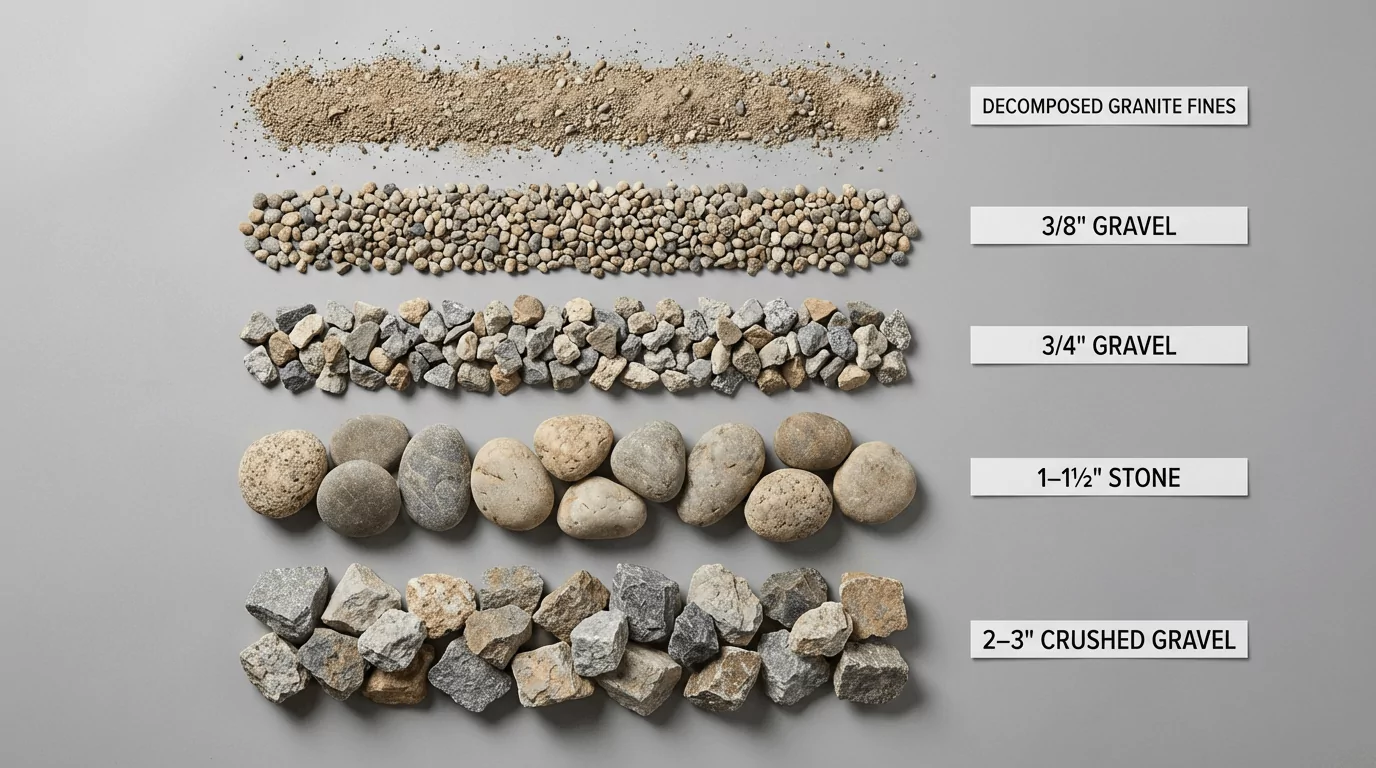
Gravel Types Comparison Chart: Sizes, Uses, Cost & Coverage
Gravel plays a bigger role in construction and landscaping than most people realize. From supporting driveways and roads to managing drainage and shaping outdoor spaces, choosing the right material matters. This article breaks down the types of gravel, comparing sizes, real-world uses, cost expectations, and coverage rates, so you can match the material to the job instead of guessing.
Key Takeaways
- Different types of gravel are designed for very different purposes, even if they look similar.
- Size and shape determine stability, drainage, comfort, and maintenance needs.
- Cost is influenced more by processing and hauling than by stone type alone.
- Coverage varies significantly by gravel size and compaction.
- Using the wrong gravel type often leads to higher long-term costs.
Types of Gravel Explained: How Size and Shape Change Performance
When people talk about gravel, they often mean very different materials. The term covers crushed stone, rounded rock, recycled aggregates, and fine blends with particles ranging from sand-sized to several inches wide.
The types of gravel available today generally fall into three functional categories:
- Structural gravel for strength and load support
- Drainage gravel for water movement
- Decorative gravel for appearance and surface finishing
Understanding where each gravel type fits prevents common problems like rutting driveways, clogged drains, or constant regrading.
Types of Gravel Comparison Chart: Sizes, Uses, Cost & Coverage
The table below gives a high-level comparison of common gravel types, showing how size directly impacts performance, cost, and coverage.
| Gravel Type | Typical Size | Primary Use | Drainage | Stability | Cost Range (per ton) | Coverage per Ton (approx.) |
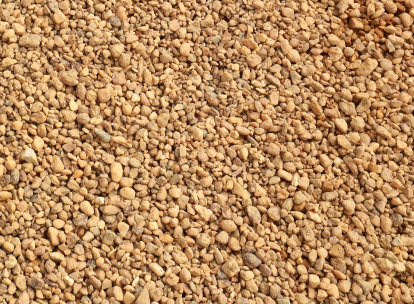
| Pea Gravel | 3/8″ rounded | Walkways, decor | High | Low | Low-Medium | 90-100 sq ft @ 2″ |
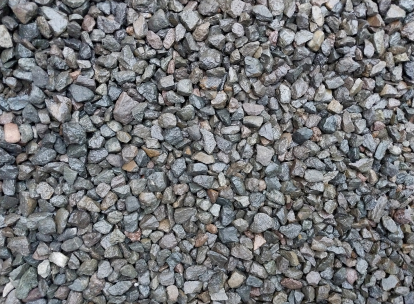
| 3/8″ Crushed Gravel | 3/8″ angular | Paths, bedding | High | Medium | Medium | 85-95 sq ft @ 2″ |
| 3/4″ Crushed Gravel | 3/4″ angular | Driveways, bases | Medium-High | High | Medium | 70-80 sq ft @ 3″ |
| 1″-1½” Crushed Stone | 1″-1.5″ angular | Structural base | High | Very High | Medium-High | 55-65 sq ft @ 4″ |
| 2″-3″ Crushed Gravel | 2″-3″ angular | Drainage, erosion | Very High | High | High | 40-50 sq ft @ 4″ |
| Decomposed Granite | fines-3/8″ | Paths, patios | Low-Medium | Medium | Medium | 90-110 sq ft @ 2″ |
| River Rock | 1″-3″ rounded | Landscaping, drainage | High | Low-Medium | High | 45-60 sq ft @ 3″ |
| Crushed Concrete | mixed | Bases, roads | Medium | High | Low | 65-75 sq ft @ 4″ |
| Road Base | fines-1″ | Foundations | Low | Very High | Low-Medium | 60-70 sq ft @ 4″ |
| Drain Rock | 3/4″-1½” | Drainage systems | Very High | Medium | Medium | 50-65 sq ft @ 4″ |
Types of Gravel for Structural Support and Load Bearing
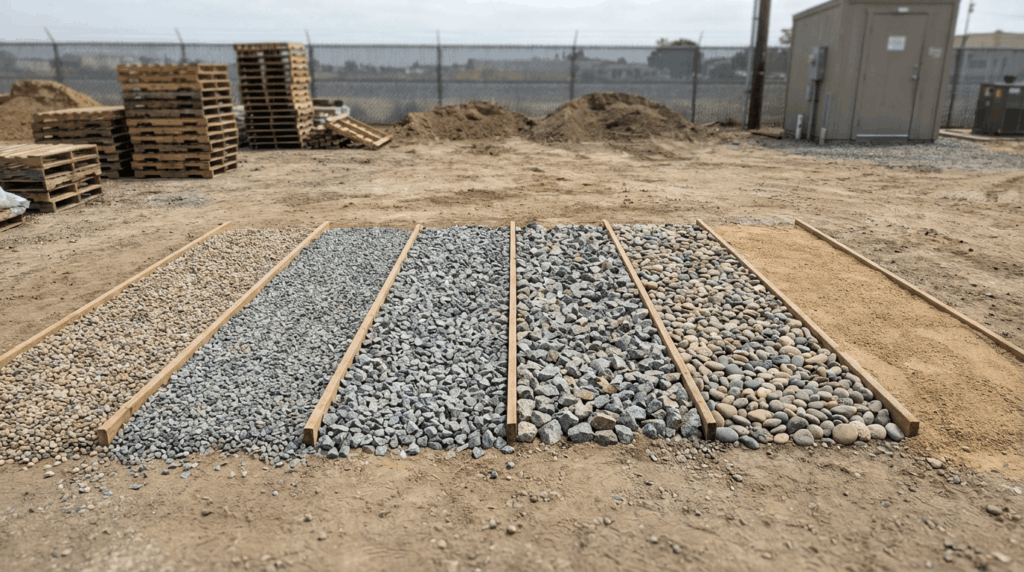
Not all gravel can handle weight. Structural gravel relies on angular pieces that interlock under compaction.
Common Structural Gravel Types
| Gravel Type | Why It Works |
| 3/4″ Crushed Gravel | Locks together for driveway surfaces |
| 1″-1½” Crushed Stone | Strong base for heavy vehicles |
| Road Base | Dense blend spreads loads evenly |
| Crushed Concrete | Compacts well at a lower cost |
These types of gravel are ideal for driveways, parking pads, and foundations. Rounded gravel may shift under weight and is rarely suitable for structural work.
Types of Gravel for Drainage and Water Control
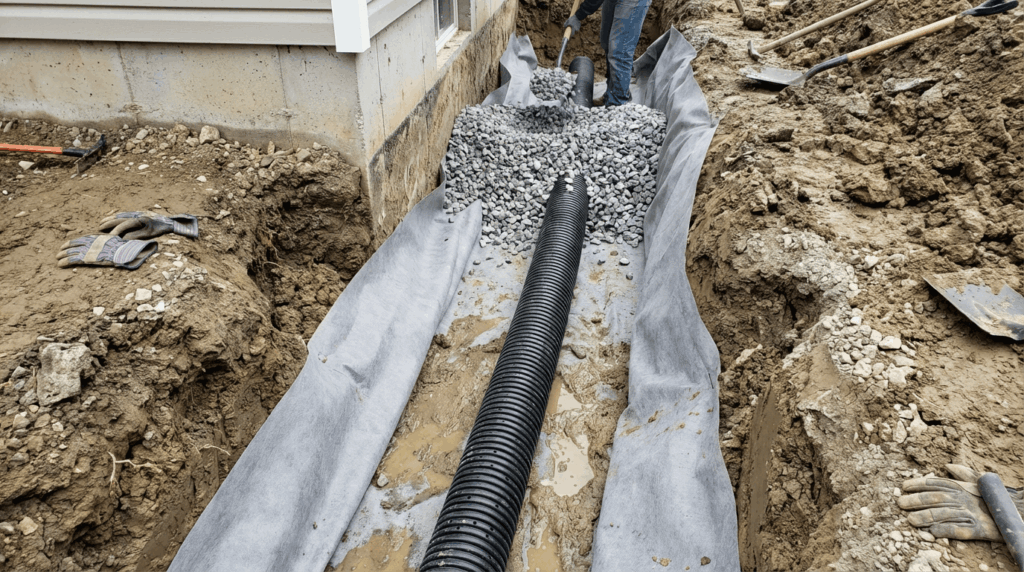
Drainage gravel stays open rather than compacting tightly. Clean stone with minimal fines allows water to move freely.
Drainage Gravel Comparison
| Gravel Type | Water Flow | Typical Use |
| Drain Rock | Excellent | French drains, foundations |
| 2″-3″ Crushed Gravel | Excellent | Culverts, erosion zones |
| River Rock | Very Good | Dry creek beds |
| 3/8″ Crushed Gravel | Good | Light drainage trenches |
Choosing the wrong gravel type for drainage often leads to clogged systems and standing water.
Types of Gravel for Landscaping and Decorative Use
Some gravel types are chosen more for appearance than performance.
| Gravel Type | Visual Style | Maintenance Level |
| Pea Gravel | Smooth, uniform | High |
| River Rock | Natural, varied | Low |
| Decomposed Granite | Earthy, compact | Medium |
| 3/8″ Crushed Gravel | Clean, modern | Low-Medium |
Rounded decorative gravel may migrate and require edging, while angular decorative gravel tends to stay in place.
Types of Gravel Cost Comparison
Gravel cost depends on quarry location, processing, and hauling distance more than the stone itself.
| Gravel Type | Processing Level | Relative Cost |
| Crushed Concrete | Recycled | Lowest |
| Road Base | Blended | Low |
| 3/4″ Crushed Gravel | Screened | Medium |
| Drain Rock | Washed | Medium |
| River Rock | Naturally sorted | High |
| Decorative Stone | Specialty | Highest |
Buying the correct type of gravel reduces replacement and maintenance costs long-term.
Types of Gravel Coverage Chart by Depth
Coverage is where many projects go wrong. Larger gravel covers less area per ton.
| Gravel Size | Depth | Coverage per Ton |
| Pea Gravel | 2″ | 90-100 sq ft |
| 3/8″ Gravel | 2″ | 85-95 sq ft |
| 3/4″ Gravel | 3″ | 70-80 sq ft |
| 1″-1½” Gravel | 4″ | 55-65 sq ft |
| 2″-3″ Gravel | 4″ | 40-50 sq ft |
Always add 5-10% extra to account for compaction and uneven ground.

Types of Gravel Installation Comparison
Installation requirements vary significantly between gravel types.
| Gravel Type | Compaction Needed | Fabric Recommended |
| Pea Gravel | Minimal | Yes |
| Crushed Gravel | Yes | Often |
| Road Base | Mandatory | Sometimes |
| Drain Rock | Minimal | Yes |
| River Rock | Minimal | Yes |
Skipping fabric or compaction is one of the most common installation mistakes.
Choosing Between Different Types of Gravel for Your Project
When deciding between different types of gravel, consider these factors:
- Load requirements
- Drainage needs
- Foot traffic vs vehicle traffic
- Long-term maintenance
- Visual expectations
There is no universal best gravel. The best choice depends entirely on the job.
Common Mistakes When Comparing Types of Gravel
| Mistake | Result |
| Using decorative gravel for driveways | Rutting and migration |
| Using base gravel for drainage | Water pooling |
| Underestimating depth | Frequent refilling |
| Ignoring fabric | Weed growth, sinking |
Understanding gravel types prevents these costly errors.
Frequently Asked Questions
What are the most common types of gravel used in residential projects?
The most common types of gravel include 3/4″ crushed gravel for driveways, pea gravel for walkways, road base for foundations, and drain rock for water management.
Which gravel types are best for driveways?
Angular gravel types like 3/4″ crushed gravel, 1″-1½” crushed stone, and road base provide the stability required for vehicle traffic.
How do different types of gravel affect drainage?
Gravel with fewer fines and larger particle sizes allows better water flow, while dense blends restrict drainage.
Is crushed concrete a reliable gravel type?
Yes, crushed concrete is widely used for bases and access roads and offers strong compaction at a lower cost.
How do I calculate coverage for different gravel types?
Coverage depends on stone size and depth. Larger gravel covers less area per ton, so depth planning is essential.
Why Gravel Type Matters More Than Price
Cheaper gravel that fails early costs more over time. Matching the type of gravel to the function leads to:
- Longer lifespan
- Less maintenance
- Better performance
- Predictable coverage
A proper gravel comparison saves money by avoiding rework.