
Gravel and Aggregate Supplies in Phoenix, AZ: What Buyers Should Know
Phoenix’s desert landscape calls for more than good looks – it demands materials built to handle heat, sudden rain, and hard ground. Whether you’re resurfacing a driveway in Tempe, installing a patio in Mesa, or building a retaining wall in Chandler, the right gravel and aggregate base makes all the difference.
“In Arizona, the right gravel base means less erosion, cooler surfaces, and a longer-lasting investment.”
Quantity Calculator
Before ordering, estimate how much material you’ll need:
- Measure your project area in feet (length × width).
- Choose your depth: 3″- 4″ for pathways, 4″ – 6″ for driveways, 8″- 12″ for base work.
- Multiply area by depth (in feet) to get cubic feet.
- Divide by 27 to convert to cubic yards.
- Add 10 – 15 % for compaction and leveling.
- For deliveries quoted in tons, ask your supplier the conversion rate (1 cubic yard ≈ 1.3 – 1.5 tons depending on stone type).
1. Understanding Gravel and Aggregates in Phoenix
Gravel and aggregate supplies in Phoenix cover a wide range of stone types pulled from Arizona’s naturally hard geology. The most common are:
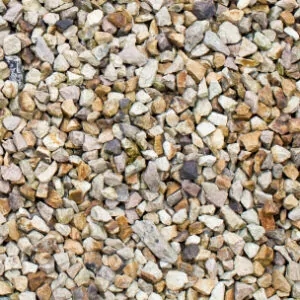
- Crushed Granite – the signature desert aggregate. Angular, durable, and naturally colored in tan or pinkish hues that complement local landscaping.
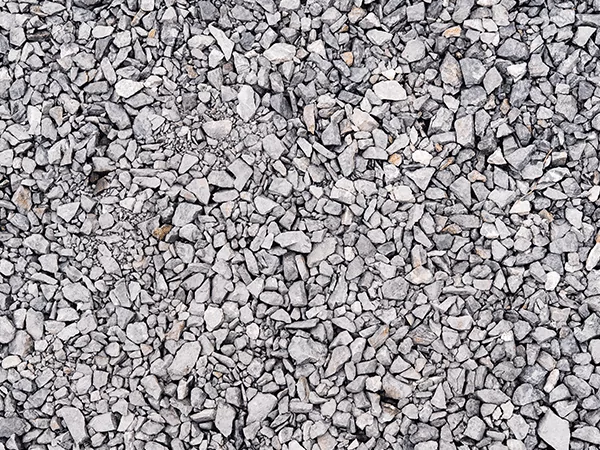
- Crushed Limestone – grayish and strong, often used for driveway and road bases.
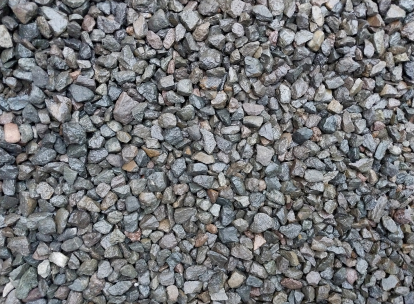
- Decomposed Granite (DG) – fine and compactable, perfect for pathways and decorative landscaping.
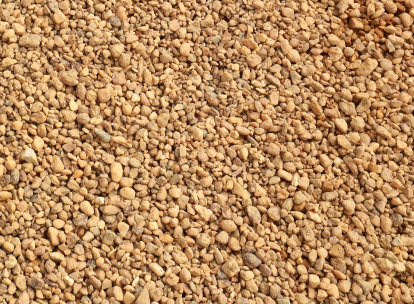
- River Rock – rounded, multicolored stone used mostly for drainage and decorative features rather than load-bearing work.
When buying, you’ll often hear two important terms:
- “Minus” means the gravel contains small fines that help it compact tightly (for example ¾″ minus).
- “Clean” or “washed” means it’s screened to remove dust and fines, ideal for drainage projects.
Local quarries and landscape yards around Phoenix – from Peoria to Gilbert – sell both clean and minus varieties depending on your project’s needs.

2. Why Phoenix’s Climate Shapes Your Material Choice
The Sonoran Desert brings unique challenges: blistering heat, sudden monsoon storms, and hard caliche sub-soils. All three directly affect how gravel performs.
- Heat Resistance: Asphalt softens and concrete cracks in triple-digit temperatures; crushed rock stays stable and cooler to the touch.
- Drainage During Monsoon Rains: Open-graded aggregates let water escape quickly, preventing erosion or flooding.
- Soil Compatibility: Phoenix soils range from sandy to clay-rich caliche. A compacted gravel base on top of fabric keeps surfaces from sinking or shifting.
- Dust Control: Fine material can dry out and create dust. Choosing washed or larger angular gravel reduces airborne particles – an important consideration in neighborhoods with HOA rules.
For most Phoenix homeowners, a ¾″ to 1″ crushed granite mix balances traction, drainage, and appearance.
3. Where Phoenix Buyers Use Gravel and Aggregates
Because gravel works in so many ways, Phoenix buyers use it across residential, commercial, and municipal settings:
Driveways and Access Roads
Crushed stone provides a firm surface that won’t rut under heavy vehicles. A base of 1″ – 1½″ gravel topped with ¾″ crushed rock is a classic formula across Arizona suburbs like Scottsdale and Surprise.
Landscaping and Xeriscaping
In drought-tolerant yards, gravel replaces turf while allowing water to percolate. Decorative blends – such as “Arizona Blonde,” “Apache Brown,” or “Saddleback Tan” – add natural color and texture without irrigation.
Drainage Systems
French drains, swales, and dry creek beds depend on clean aggregates like ¾″ washed gravel or river rock to move stormwater away from homes during monsoon season.
Construction and Foundations
Aggregates form the sub-base for patios, concrete pads, retaining walls, and garden sheds. Crushed limestone or granite compacts into a strong, load-bearing layer beneath pavers or concrete.
Erosion Control and Roadside Work
Large 2″- 3″ crushed stone or riprap is used along slopes, culverts, and wash edges around Chandler, Mesa, and Queen Creek to prevent washouts.
4. Key Benefits of Using Local Gravel and Aggregate Supplies
1. Strength and Stability
Angular crushed rock locks together tightly, creating a dense surface that resists movement and rutting – essential for vehicle traffic and Arizona’s expanding soils.
2. Reliable Drainage
Open-graded aggregates let water move through instead of pooling, protecting foundations and driveways from erosion.
3. Cost-Effective Installation
Gravel is typically one-third the cost of asphalt or concrete and requires fewer specialized tools. Local suppliers in the Phoenix metro often deliver directly to site within a few days.
4. Natural Cooling Effect
Light-colored aggregates reflect sunlight, reducing surface temperature around homes and lowering ambient heat compared to dark pavement.
5. Environmentally Responsible
Sourcing from nearby quarries in Maricopa County reduces transportation emissions. Recycled aggregates, such as crushed concrete or reclaimed asphalt, are also widely available for eco-conscious builds.
6. Aesthetic Versatility
From contemporary courtyards to ranch-style estates, Phoenix gravel options blend seamlessly with cacti, succulents, and desert stonework for a cohesive landscape look.
5. Buying Guide: Choosing and Ordering Gravel in Phoenix
Before you place an order, consider these buying and delivery insights tailored to the Phoenix market.
Know What You Need
Estimate project area and required depth using the calculator above. Suppliers price gravel by ton or cubic yard – confirm which unit they use.
Pick the Right Size
- ⅜″ – ½″ for pathways and light landscaping
- ¾″ for driveways, general bases, and drainage
- 1″ – 1½″ for heavy-duty bases and erosion control
- 2″ – 3″ for large fill or slope stabilization
Ask About Gradation
Specify “¾″ minus” for compacting surfaces or “¾″ clean” for drainage applications.
Compare Local Suppliers
Trusted aggregate suppliers in Phoenix, Tempe, Mesa, Chandler, and Scottsdale often list material types, coverage calculators, and delivery zones online. Ask about:
- Minimum order quantities (often 5 tons + for delivery)
- Delivery schedule and truck access
- Material origin (local granite vs. limestone)
- Moisture content and cleanliness
Confirm Color Consistency
Because desert stone varies by quarry, request a sample or view stock piles to ensure color uniformity, especially for visible landscaping areas.
6. Installation Tips for Arizona Terrain
Prepare the Base
Remove all vegetation and organic soil. If your site has hard caliche, break it up or scarify it before laying gravel.
Use Fabric for Separation
A non-woven geotextile fabric keeps gravel from mixing with the sub-soil and reduces weed growth – particularly valuable in sandy Mesa or Gilbert soils.
Spread in Layers
Apply gravel in 2 – 4″ lifts and compact after each lift using a plate compactor or roller. Moistening lightly during compaction helps the stone bind.
Set the Grade
Always slope the surface 1⁄4″ per foot away from structures to direct runoff. For longer driveways, create a slight crown in the center to help water shed evenly.
Edge and Contain
Use steel, timber, or masonry edging to keep gravel from migrating into landscaping beds. Curbs or bender-board are common solutions around Phoenix homes.
Account for Heat
If installing during summer, compact and grade early morning or late evening to avoid premature drying and dust formation.
7. Long-Term Maintenance & Seasonal Care
Even though gravel is low-maintenance, Phoenix’s environment means a little attention goes a long way.
- Rake and Regrade: After dust storms or monsoon rain, rake displaced gravel back into place to prevent uneven surfaces.
- Top Off Periodically: Add a half-inch of fresh gravel every 2 – 3 years to maintain depth and color.
- Control Weeds and Dust: Use a gravel-safe herbicide or vinegar solution seasonally; treat dusty driveways with light water or magnesium chloride flakes if needed.
- Inspect Drainage: Check swales and trenches each spring to ensure rock beds aren’t clogged with sediment.
- Snow or Rain Management: Though rare, when using a plow or blower, keep blades slightly above the gravel to prevent displacement.
With proper care, a gravel driveway or landscape base in Phoenix can last decades with only minor refreshes.
Frequently Asked Questions
What type of gravel works best for Phoenix driveways?
For most Phoenix homes, ¾″ crushed granite or ¾″ crushed limestone is ideal. The angular shape interlocks under compaction, staying firm in the desert heat while still draining well during monsoon rain. Avoid rounded river rock, which tends to roll and shift under vehicle weight.
What is the difference between “clean” and “minus” gravel?
“Clean” gravel is screened to remove fine particles, making it perfect for drainage projects and French drains.
“Minus” gravel includes fines (small stone dust) that help the material compact tightly – the better choice for driveways, pathways, or patio bases.
How much gravel do I need for a driveway or landscape project?
Measure your area (length × width) and multiply by depth in feet to get cubic feet. Divide by 27 to convert to cubic yards.
For example, a 12 × 50 ft driveway at 4″ deep needs about 7.5 – 8 cubic yards (≈10 – 11 tons). Always add 10 – 15 % extra for compaction and leveling.
Does gravel hold up to Phoenix’s extreme heat?
Yes. Crushed stone and granite handle triple-digit temperatures better than asphalt or concrete, which expand and crack. Light-colored gravel also reflects heat, keeping driveways and landscapes cooler around your home.
How often should I add or replace gravel?
On average, top off gravel every 2 – 3 years to replace material lost from compaction, wind, or rain. Full replacement is rarely needed if you maintain a solid base layer and rake after storms.
Can gravel help with drainage around my property?
Absolutely. Washed aggregates such as ¾″ clean stone or river rock let water flow freely, preventing pooling and protecting foundations during monsoon rains. They’re commonly used in Phoenix for French drains, dry creek beds, and swales.
Build Smart with Local Phoenix Aggregates
For homeowners and contractors across the Valley – from downtown Phoenix to Glendale, Tempe, and Queen Creek – gravel remains one of the most reliable and adaptable building materials available. Its combination of strength, drainage, and visual appeal suits Arizona’s climate like nothing else.
Working with local aggregate suppliers in Phoenix ensures faster delivery, material compatibility with desert soils, and professional guidance on sizing, drainage, and maintenance. Whether you’re creating a long ranch driveway, stabilizing a slope, or designing a low-water front yard, the right gravel will keep your property functional and beautiful through every dry spell and monsoon.