Crusher Run vs 57 Stone: Which Should You Order?
Crusher run and 57 stone sit in bins next to each other at the yard, and to an untrained eye they can look almost the same shade of gray. Order the wrong one, though, and you either end up with a driveway base that never firms up or a drainage trench that clogs with dust. This guide breaks down crusher run vs 57 stone so you know exactly which one belongs on your project.
- Crusher run is a mix of crushed stone and stone dust that compacts into a dense, stable base.
- 57 stone is a clean, angular aggregate with no fines, built for drainage and open void space.
- Crusher run wins for driveway bases, paver bases, and compacted walking paths.
- 57 stone wins for French drains, drain rock backfill, and septic bed stone.
- Pricing runs close between the two. The right choice saves you a costly redo, not just a few dollars a ton.
Crusher Run vs 57 Stone: What’s the Difference
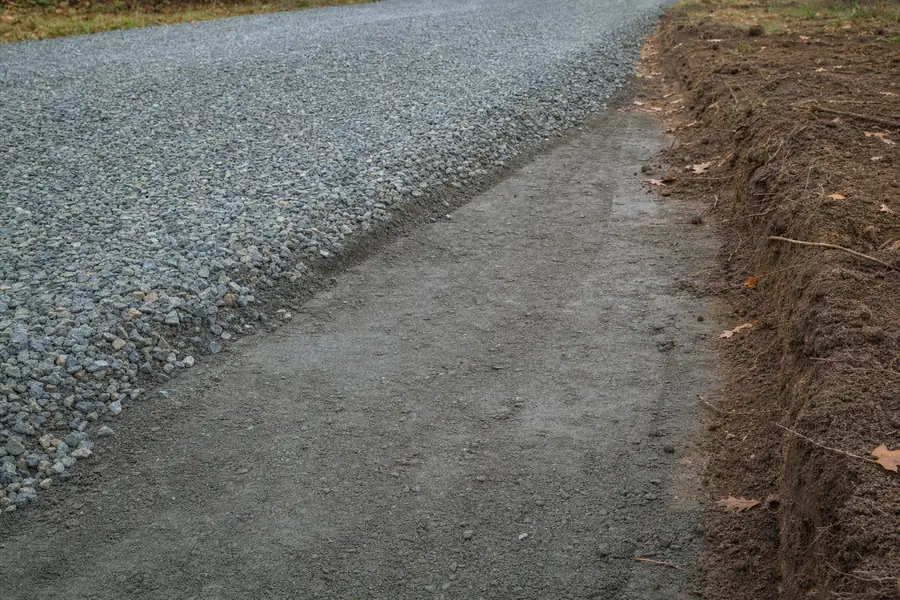
Crusher run is a blend of crushed stone in a range of sizes down to stone dust. The dust and small fragments fill the gaps between larger pieces, so when you compact it with a plate tamper or roller, it locks into a dense, load-bearing mat. That density is exactly why it makes a good driveway base and a poor drainage layer: water has almost nowhere to go once it’s packed in.
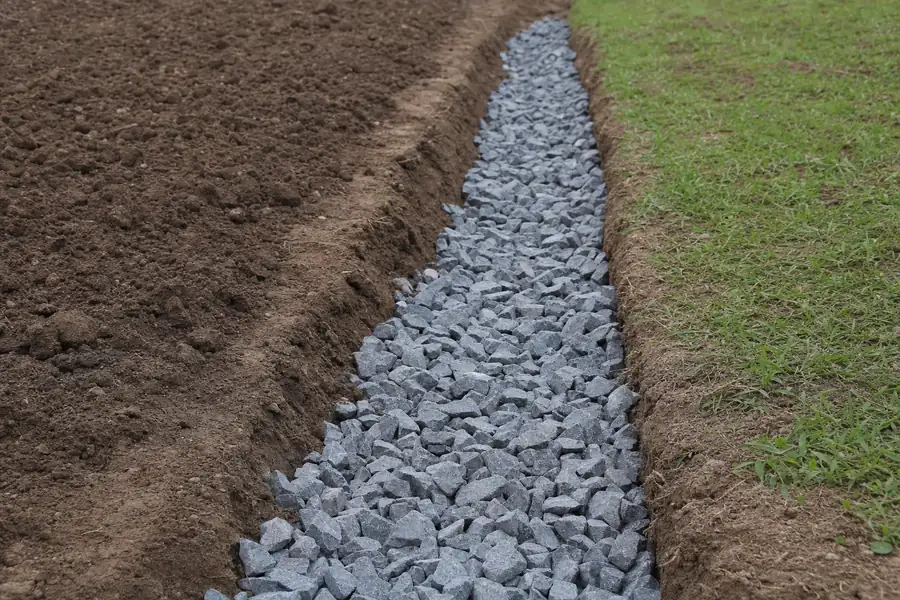
57 stone is the opposite approach. It’s a single-sized, angular crushed stone with the fines screened out, which leaves plenty of open void space between the pieces. Water moves through it fast instead of pooling on top. It won’t compact into a hard slab the way crusher run does, because there’s nothing small enough to fill the gaps.
| Attribute | Crusher Run | 57 Stone |
|---|---|---|
| Composition | Crushed stone plus stone dust | Clean, single-sized crushed stone |
| Particle size | Dust up to about 3/4 inch | Roughly 3/4 to 1 inch, no fines |
| Compaction | Compacts dense and stable | Stays loose and open |
| Drainage | Low, fines slow water down | High, water passes freely |
| Best use | Driveway base, paver base, paths | French drains, drain rock, septic beds |
If you want the full breakdown of how these sizes stack up against other aggregates, the gravel types comparison chart is a useful reference alongside this one.
What Crusher Run Is Best For
Crusher run earns its keep as a base layer. Under a gravel or paver driveway, it spreads load from tires down into the subgrade instead of letting weight punch straight through to the soil. Compacted in 3 to 4 inch lifts, it resists rutting and stays put through freeze-thaw cycles.
It also works well under patios, sheds, and walkways where you need a firm, level surface that won’t shift underfoot. Gravel Monkey customers building a new driveway often pair crusher run with a topcoat of decorative gravel, and if you want the full sequence, the best base for a gravel driveway guide covers it layer by layer. For heavier commercial applications, some contractors reach for road base instead, which behaves similarly but with a tighter gradation spec.
What 57 Stone Is Best For
57 stone does its best work anywhere water needs somewhere to go. Wrap it in geotextile fabric around a perforated pipe and you have a French drain that won’t silt up for years. Backfill a foundation footing with it and groundwater moves away from the structure instead of sitting against it.
It’s also a common choice for septic bed stone, retaining wall backfill, and drainage swales where standing water is the problem you’re solving. If drainage is the whole reason you’re comparing materials, the best gravel for drainage guide and the best gravel for a French drain breakdown both go deeper than we can here. Straight drain rock is another option worth comparing if your voids need to be even larger.
Crusher Run vs 57 Stone: Cost and Coverage
Pricing between the two tends to sit close together, so cost rarely decides the choice on its own. Coverage differs a bit more because crusher run compacts down and 57 stone stays loose.
| Material | Typical price per ton | Coverage per ton (2 in depth) |
|---|---|---|
| Crusher run | $28 to $45 | Roughly 100 sq ft |
| 57 stone | $30 to $50 | Roughly 80 to 90 sq ft |
Exact numbers shift by region and hauling distance, so treat these as a rough guide rather than a quote. For your specific project size, run the numbers through the aggregate needs calculator guide before you order.
Crusher Run vs 57 Stone: Which Should You Order
Ask yourself one question first: does this spot need to bear weight, or does it need to move water? Crusher run is the answer when the job is a base, a path, or anywhere tires and feet will land directly on it. 57 stone is the answer when the job is drainage, backfill, or any spot where standing water is the enemy.
Climate nudges the decision too. In a place like Rapid City, South Dakota, where freeze-thaw cycles heave poorly drained bases, getting the drainage layer right with 57 stone before you compact crusher run on top matters more than in a consistently dry climate. Around Albuquerque, New Mexico, drainage pressure is lower, but a compacted crusher run base still keeps a driveway from rutting under summer heat and traffic.
Gravel Monkey stocks both materials and can help match tonnage to your layout, so you’re not guessing between the two or over-ordering either one.
FAQs
Can I use crusher run and 57 stone together?
Yes, and it’s actually common. 57 stone often goes down first for drainage, with crusher run compacted on top as the load-bearing base for a driveway or patio.
Which one compacts better?
Crusher run compacts significantly better because the stone dust fills the voids between larger pieces. 57 stone is designed to stay open and won’t lock down the same way.
Is 57 stone the same as pea gravel?
No. 57 stone is angular and crushed, while pea gravel is small and rounded. Angular stone locks together and drains cleanly; rounded stone rolls and shifts underfoot.
Which is cheaper, crusher run or 57 stone?
Prices sit close together in most areas, often within a few dollars a ton. Coverage and compaction needs usually matter more to your total cost than the sticker price per ton.