What Is Crusher Run? Uses, Sizes & Cost
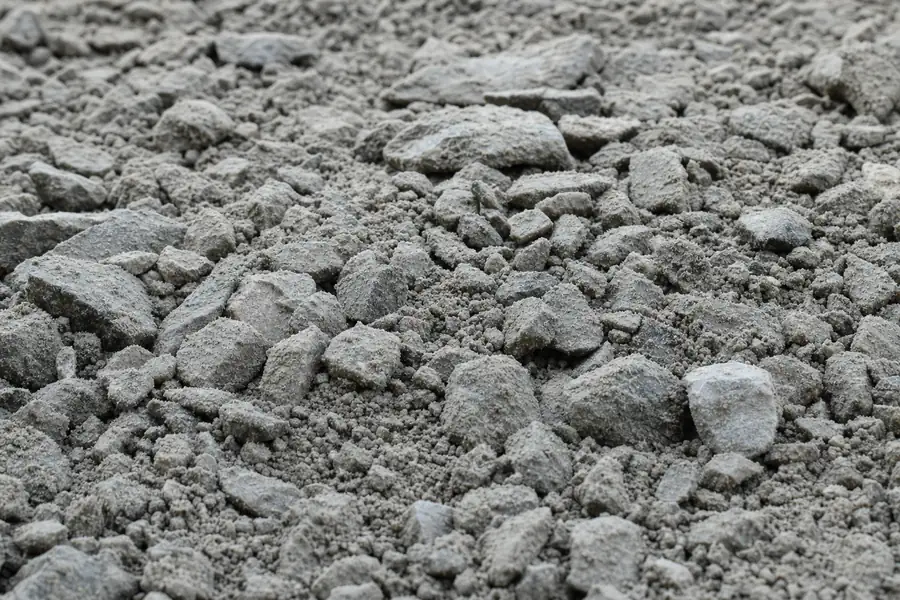
Quick answer: Crusher run is crushed stone that still has its fines (fine stone dust) mixed in, so once you spread it, mist it lightly, and compact it, the particles lock together into a dense, semi-solid layer instead of staying loose like clean gravel. It goes by a few other names depending on where you live: crush and run, ABC stone, or dense-graded aggregate.
That binding ability is why contractors reach for crusher run under driveways, sheds, and parking pads instead of a clean, single-size stone. The mix of large and small particles fills its own gaps, which is exactly what a load-bearing base needs to do.
Crusher Run Quick Facts
| Attribute | Detail |
|---|---|
| Size range | 3/4 in down to fine dust |
| Composition | Crushed stone plus fines (stone dust), not screened out |
| Other names | Crush and run, ABC stone, dense-graded aggregate, DGA |
| Weight per yard | Roughly 2,600 to 2,900 lbs compacted |
| Typical cost per ton | $25 to $50 in most areas |
| Signature use | Compacted base under driveways, pads, and patios |
What Crusher Run Is Made Of
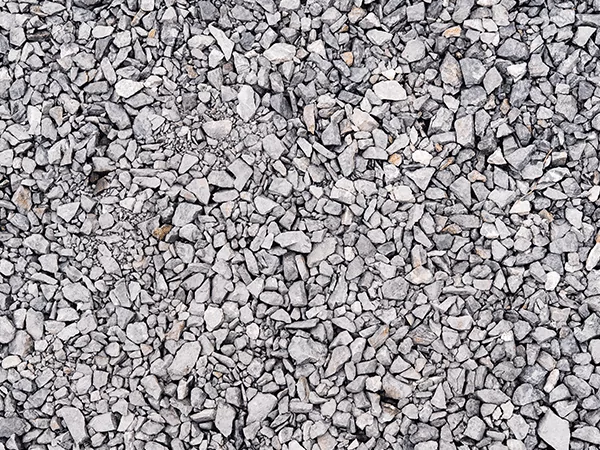
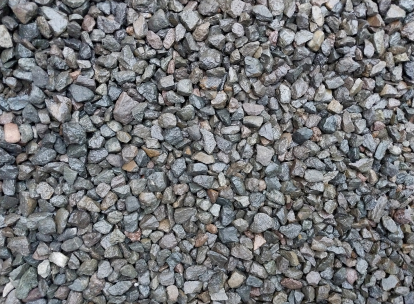
Crusher run comes straight off the crusher without a final screening pass, so it keeps every particle size the process produces, from fist-size chunks down to powder-fine dust. Clean stones like #57 crushed stone get run through screens that pull the fines out, leaving uniform, washed rock. Crusher run skips that step on purpose.
That dust is not a defect. It’s the ingredient that lets crusher run bind. Under the ASTM D448 aggregate sizing standard, this mix of large and small particles makes crusher run a dense-graded aggregate, unlike the numbered, single-size clean stones on that same chart.
So if a delivered pile looks dusty and turns a bit gray or muddy at the edges when damp, that’s normal. It’s supposed to look that way.
Crusher Run vs Clean Stone (#57)
Crusher run compacts hard and sheds water slowly; #57 crushed stone stays loose and drains fast. Picking between them comes down to whether the job needs a solid base or open drainage.
| Factor | Crusher Run | #57 Crushed Stone |
|---|---|---|
| Compaction | Locks into a firm, semi-solid layer | Stays loose, does not bind |
| Drainage | Slow, fines can clog voids | Fast, open void space |
| Surface feel | Hard and walkable once set | Loose underfoot, shifts with traffic |
| Cost per ton | Typically $25 to $50 | Typically $35 to $65 |
- Building a base, pad, or sub-driveway layer: use crusher run.
- Need water to pass through fast, like around a drain trench: use #57 crushed stone instead.
Top Uses for Crusher Run
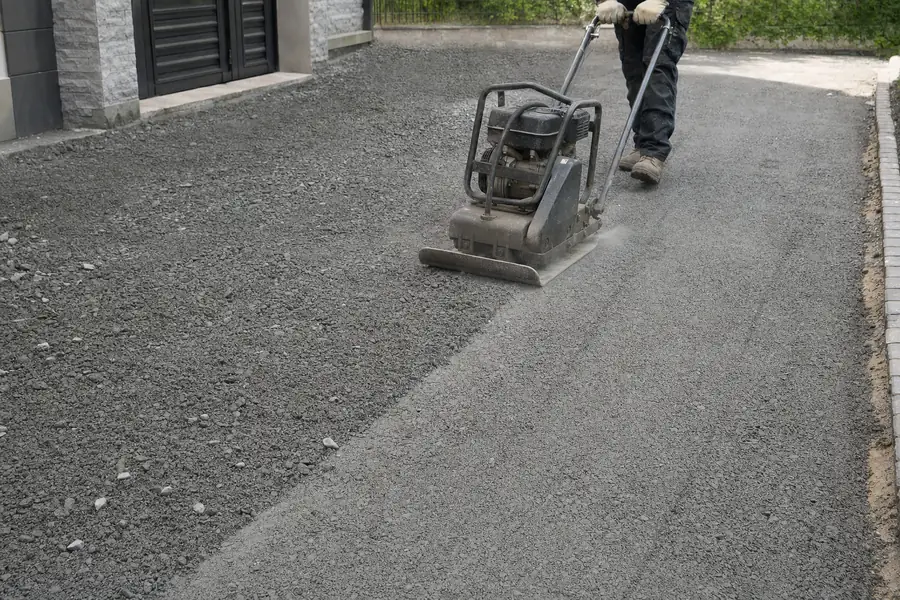
Crusher run earns its reputation as an all-purpose base material because it compacts hard, sheds most surface water, and costs less per ton than clean stone.
Driveway base and top
Most gravel driveways start with a compacted crusher run base 4 to 8 inches deep, sometimes topped with a thin layer of decorative stone. The guide to the best base for a gravel driveway covers how deep to go and why skipping this layer leads to ruts and washouts.
Shed and parking pads
A shed, RV pad, or small parking area needs a surface that won’t shift under a stationary load. Crusher run compacted in 2 inch lifts builds that stable footing for a fraction of the cost of a concrete slab.
Paths and walkway bases
Under a paver or flagstone path, a compacted crusher run base keeps the stones from rocking or sinking over time, because it fills the gaps under and around each paver the way loose gravel cannot.
Patching potholes
A shovelful of crusher run tamped into a pothole compacts nearly as firm as the surrounding surface, which makes it a common patch material for gravel driveways and roads between full resurfacing jobs.
Cost and Coverage
Crusher run typically runs $25 to $50 per ton, or roughly $30 to $65 per cubic yard, depending on your region and hauling distance from the quarry. A compacted 4 inch layer covers about 50 to 60 square feet per ton, so a 400 square foot driveway base takes somewhere in the range of 7 to 8 tons.
| Compacted depth | Coverage per ton |
|---|---|
| 4 in | 50 to 60 sq ft |
| 6 in | 35 to 40 sq ft |
| 8 in | 25 to 30 sq ft |
Coverage drops fast as depth increases, so run your own dimensions through the gravel calculator before you order rather than guessing at a truckload count.
How to Install It Right
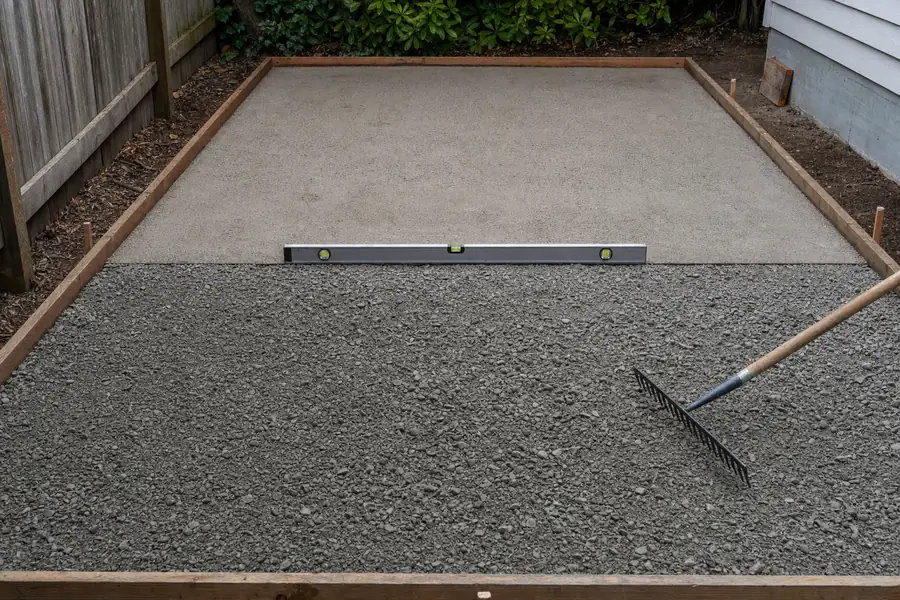
Crusher run only performs like a solid base when it’s compacted in thin layers, not dumped in one deep pile. Follow this sequence:
- Excavate and grade the subgrade, removing soft soil and organic material.
- Spread crusher run in lifts no deeper than 2 inches.
- Mist each lift lightly with water, since too dry won’t bind the fines and too wet turns them to mud.
- Compact each lift fully with a plate compactor or roller before adding the next.
- Crown the finished surface slightly so water sheds to the sides instead of pooling.
The EPA’s gravel roads maintenance and design manual covers this same principle for public roads: the right balance of fines, moisture, and compaction energy is what turns loose aggregate into a bound, load-bearing surface. The step-by-step driveway installation guide walks through the full process from grading to final compaction.
Pros and Cons
Crusher run’s low cost and hard-packing nature make it the default base material, but it’s not the right fit for every job.
- Pros: cheap compared to clean stone, compacts into a firm surface, easy to grade and shape, patches well
- Cons: dusty when dry, fines turn to mud when saturated, doesn’t drain freely like #57 or drain rock
FAQs
Is crusher run better than gravel for a driveway?
For the base layer, yes. Crusher run compacts into a firm, stable foundation that plain loose gravel can’t match, which is why most driveways use crusher run underneath and a decorative gravel like pea gravel or river rock on top.
Does crusher run harden like concrete?
No, but it comes close once compacted. The stone dust binds with moisture and compaction pressure into a dense, semi-rigid layer that resists rutting, though it never cures hard like concrete and can loosen again if it dries out and gets disturbed.
What is another name for crusher run?
Crusher run is also sold as crush and run, ABC stone, dense-graded aggregate (DGA), or quarry process, depending on your region and supplier.
How thick should crusher run be?
Most driveway and pad bases use 4 to 6 inches of compacted crusher run, spread and compacted in 2 inch lifts. Heavier vehicle traffic or soft native soil can call for 8 inches or more.
Can you use crusher run as a top layer?
You can, and some budget driveways do it for a low-dust, low-cost surface, but the fines mean it shows tire marks and dust more than a clean decorative gravel. Most homeowners cap it with a thin layer of pea gravel, river rock, or crushed stone for a cleaner finish.