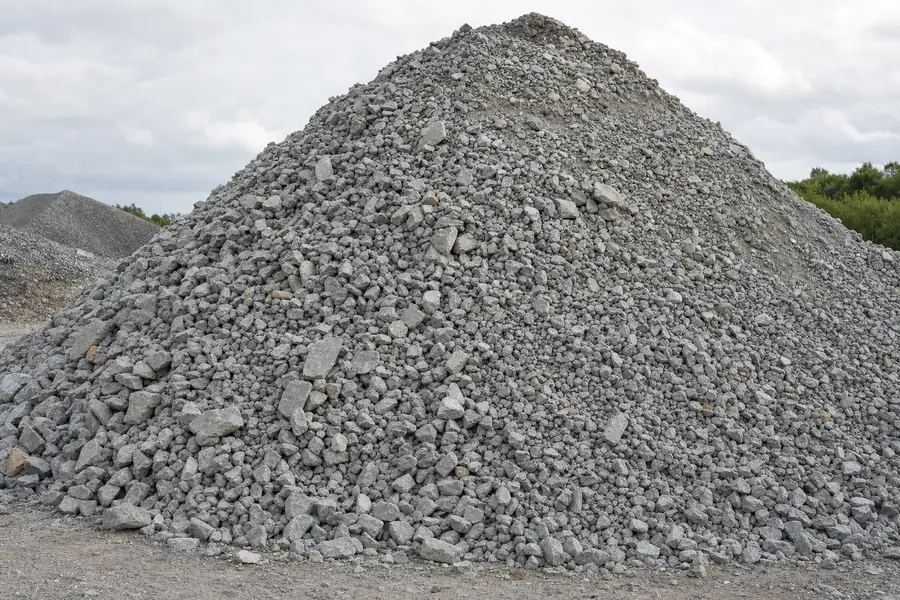
Crushed Concrete Weight Per Yard
A cubic yard of crushed concrete typically weighs between 2,400 and 2,900 pounds, or roughly 1.2 to 1.45 tons. Most suppliers use 1.4 tons per yard as a working average when quoting a delivery, though the exact figure moves depending on particle size, moisture content, and how tightly the material has settled.
That range matters because deliveries are usually sold by weight, but your project is measured by volume. Getting the conversion wrong is one of the most common reasons homeowners end up short a load or paying for material they didn’t need.
What Determines Crushed Concrete Weight Per Yard
Crushed concrete comes from demolished slabs, sidewalks, and structures that get run through a crusher and screened into size grades. Because it’s recycled cured concrete rather than quarried stone, its density runs a bit lower than natural crushed stone, which is why it usually lands at the lighter end of the aggregate weight scale.
Three things push that number up or down for any given load.
- Particle size: Finer material packs tighter and weighs more per yard than coarse chunks with big air gaps between pieces.
- Moisture: Wet crushed concrete can weigh 5 to 10 percent more than the same material dry, simply from water clinging to the surface.
- Compaction: Loose material sitting in a pile weighs less per yard than the same material after a plate compactor or roller has driven the fines down into the voids.
This is the same logic that applies across aggregate types, and it’s worth reading through how aggregate sizes affect project performance if you’re still deciding what grade fits your job.
Crushed Concrete Weight Per Yard by Particle Size
| Material | Weight per Yard | Tons per Yard |
|---|---|---|
| 3/8 inch crushed concrete | 2,500-2,600 lbs | 1.25-1.3 |
| 3/4 inch crushed concrete | 2,600-2,700 lbs | 1.3-1.35 |
| 1-1.5 inch crushed concrete | 2,700-2,800 lbs | 1.35-1.4 |
| 2-3 inch crushed concrete | 2,800-2,900 lbs | 1.4-1.45 |
Unscreened crushed concrete that blends fines with larger fragments tends to sit in the middle of this range, since the smaller particles fill gaps between the bigger ones and add density without changing the visible size much.
Crushed Concrete Weight Per Yard vs Gravel and Stone
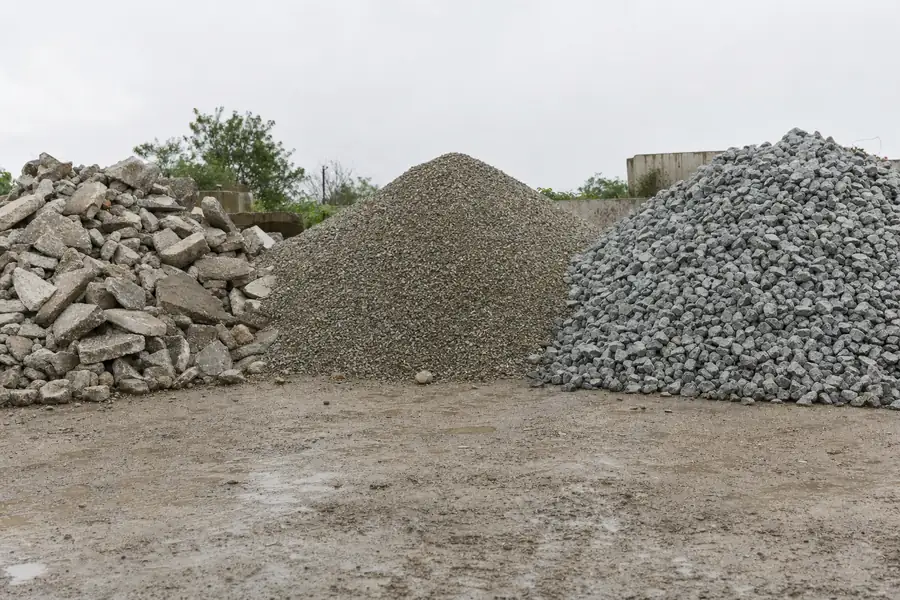
Buyers often assume all aggregate weighs the same, then order the wrong quantity. It doesn’t, and the difference is big enough to matter on a full driveway or base layer.
| Material | Typical Weight per Yard |
|---|---|
| Crushed concrete | 2,400-2,900 lbs |
| Crusher run | 2,600-2,800 lbs |
| Driveway gravel | 2,600-2,900 lbs |
| Road base | 2,800-3,000 lbs |
Crushed concrete generally comes in a little lighter than quarried stone of the same size, which is one reason it’s a popular budget-friendly base material. It compacts well and locks together thanks to its angular shape, even though it starts out lighter by the yard. If you want the full picture on where recycled material fits versus virgin aggregate, the environmental benefits of crushed concrete are worth a look too.
How to Calculate Crushed Concrete Weight Per Yard for Your Job
Start with the volume you need in cubic yards, then convert to tons using a working figure of 1.4 tons per yard for most crushed concrete grades. That’s the number Gravel Monkey typically uses for estimating unless you’re ordering the coarsest 2-3 inch grade, which runs slightly heavier.
For example, a driveway base needing 15 cubic yards of crushed concrete works out to about 21 tons (15 x 1.4). Add 5 to 10 percent if the material will sit outside and absorb rain before it’s spread, since wet weight climbs quickly.
If you’d rather skip the math, Gravel Monkey’s aggregate calculator handles the conversion for you, and the guide on calculating aggregate needs accurately walks through the same process step by step for other materials.
Common Mistakes When Estimating Crushed Concrete Weight
The most frequent error is pulling a weight figure from a gravel chart and applying it to crushed concrete. The two materials aren’t interchangeable on paper even when they look similar in a pile.
Another common one: ordering by volume without checking moisture. A yard of crushed concrete pulled straight from a rained-on stockpile can weigh noticeably more than the dry figure used to plan the order, which throws off truck counts on bigger jobs.
Contractors in wetter regions, and homeowners near coastal areas like Brooklyn, New York, tend to see this swing more than buyers in drier climates. When in doubt, order slightly heavy rather than short. A partial extra ton costs less than a second delivery fee.
FAQs
How much does a yard of crushed concrete weigh compacted versus loose?
Loose crushed concrete runs toward the lighter end of the 2,400 to 2,900 pound range. Once compacted, the same material settles into a denser mass, effectively increasing the weight held within the same footprint even though you didn’t add more material.
How many tons of crushed concrete do I need for a driveway?
Multiply your cubic yardage by roughly 1.4 tons per yard for a standard estimate, then adjust up slightly if you’re using a coarser 2-3 inch grade or expect the pile to sit outside before installation.
Is crushed concrete heavier than gravel?
Not usually. Crushed concrete tends to weigh a bit less per yard than natural gravel or crushed stone of the same size, since cured concrete is less dense than quarried rock.
Does crushed concrete weight change with moisture?
Yes. Wet crushed concrete can weigh 5 to 10 percent more per yard than dry material, which matters most when you’re estimating tonnage for a large delivery rather than a small backyard project.