Rock & Driveway Gravel in Drew, Mississippi
Local Topsoil, Dirt, Sand, Rocks and Gravel near me in Drew, Mississippi
Shop Aggregates for Delivery in Drew
Order online for free delivery to any Drew address.


Gravel Monkey delivers premium aggregates and stone materials throughout Drew, Mississippi and the surrounding Sunflower County region. Whether you're building a new driveway near downtown Drew, managing drainage on agricultural land, or creating pathways for a rural property, we provide high-quality aggregates with free delivery directly to your location. Our service extends throughout the Mississippi Delta, bringing professional-grade materials to residential, commercial, and agricultural customers across the area.
Complete Range of Aggregates Available in Drew
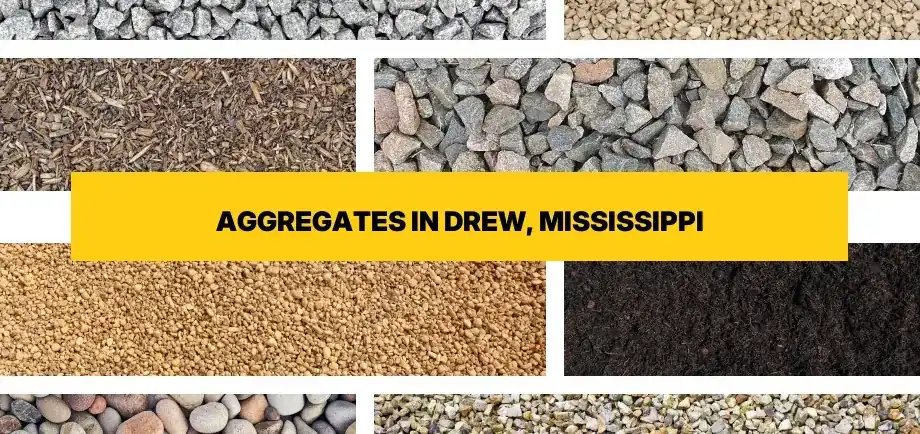
We supply a comprehensive selection of stone, gravel, and aggregate materials specifically suited to the unique soil and climate conditions of the Mississippi Delta. Each product is selected for its performance in Drew's characteristic clay soil and humid subtropical environment:
- Driveway Gravel - Durable aggregate designed for residential and farm driveways
- 3/4 Inch Crushed Stone - Versatile aggregate for driveways and foundations
- #57 Stone - Popular drainage stone for construction applications
- Crusher Run - Compactable base material ideal for Delta soil conditions
- Road Base - Stable foundation for farm roads and commercial drives
- Pea Gravel - Smooth decorative stone for walkways and landscaping
- River Rock - Natural aesthetic stone for gardens and drainage features
- Drain Rock - Large aggregate for water management systems
- Crushed Concrete - Recycled aggregate for cost-effective projects
- Topsoil - Nutrient-rich soil for gardens and lawn establishment
- Fill Dirt - Essential for grading and land leveling
- Mason Sand - Fine sand for construction and masonry work
- Washed Sand - Clean sand for multiple applications
- Playground Sand - Safe, clean sand for play areas
- Decomposed Granite - Natural material for pathways and erosion control
- Walkway Gravel - Decorative aggregate for pedestrian paths
Serving Drew and Surrounding Sunflower County Communities
Our free delivery service reaches throughout Drew and the surrounding Mississippi Delta communities. We're proud to serve properties and projects in these areas:
- Downtown Drew - Historic commercial district and residential properties near the Drew city center
- North Drew - Residential neighborhoods and properties along Highway 49W
- South Drew - Agricultural areas and rural properties extending toward the Sunflower River
- East Drew - Properties near Sunflower County Road 740 and farming areas
- Bobo - Small community west of Drew with agricultural and residential properties
- Rome Community - Rural area northeast of Drew along Highway 49E
- Ruleville Area - Properties near Drew's neighboring city to the north
- Sunflower River Bottom - Agricultural lands and properties along the river drainage area
Whether your project is in the heart of Drew or on agricultural land throughout Sunflower County, Gravel Monkey brings quality aggregates to your site with no delivery charges.
Understanding Drew's Soil Conditions and Climate
Successfully working with aggregates in Drew requires understanding the area's distinctive geology and weather patterns. The Mississippi Delta presents unique challenges that influence material selection and project planning.
Delta Clay Soil Characteristics
Drew sits in the heart of the Mississippi Delta, where alluvial deposits have created some of the richest but most challenging soils in North America. The predominant Sharkey clay and Commerce silt loam soils are fertile but problematic for construction. These heavy clay soils expand when wet and contract during dry periods, creating significant issues for driveways, foundations, and structures. The clay content often exceeds 40%, making proper drainage and stable base materials absolutely critical for any construction project.
Rainfall and Drainage Challenges
Drew receives approximately 53 inches of rainfall annually, well above the national average, with peak precipitation occurring from March through May and again in November. This substantial rainfall, combined with poor-draining clay soils, creates standing water issues throughout much of the year. Properties in low-lying areas near the Sunflower River bottom face particular drainage challenges. The flat topography of the Delta means water doesn't naturally flow away from structures, requiring engineered drainage solutions and carefully selected aggregates for effective water management.
Temperature and Seasonal Considerations
The humid subtropical climate brings hot, humid summers with temperatures regularly exceeding 90°F from June through September, and mild winters with occasional freezes from December through February. While frost penetration is minimal compared to northern states, the freeze-thaw cycles that do occur can affect improperly installed aggregates. The high humidity throughout the year means materials must resist moisture-related deterioration and provide adequate drainage to prevent water accumulation beneath surfaces.
Selecting the Right Aggregates for Drew Projects
The Mississippi Delta's unique conditions demand careful material selection. Here's how different aggregates perform in Drew's environment:
Driveway and Road Construction
For driveways in Drew, the foundation is everything. The expansive clay soils require a stable base that provides both load-bearing capacity and drainage. Many contractors recommend excavating 8-12 inches of clay soil before installing aggregate layers. This depth allows for proper base material installation while ensuring the driveway remains stable through wet and dry seasons. Agricultural properties often need even deeper preparation for equipment traffic.
Base layers should use compactable materials that create a solid foundation resistant to the clay's movement. These materials lock together when compacted, creating a matrix that distributes weight effectively and prevents sinking. For surface layers, angular aggregates provide better traction and interlock more securely than rounded materials. The typical driveway in Drew benefits from a multi-layer approach: a bottom layer of compactable base material, followed by a surface layer of crushed stone that provides drainage and traction.
Drainage and Foundation Solutions
Foundation drainage is critical in Drew properties. The combination of heavy rainfall and clay soil means water naturally accumulates around building foundations, creating hydrostatic pressure that can damage structures. Proper drainage systems should include perforated pipes surrounded by clean stone that allows water to flow freely while filtering out fine soil particles. The aggregate must maintain void space even under compression from surrounding soil.
French drains, foundation drains, and surface drainage systems all rely on properly sized and clean aggregates. For residential foundations, installing drainage systems during initial construction is far more cost-effective than retrofitting later. Properties in North Drew and areas near the Sunflower River bottom particularly benefit from comprehensive drainage planning.
Agricultural and Commercial Applications
Sunflower County's agricultural economy means many aggregate purchases support farm operations. Equipment pads, barn floors, farm roads, and equipment storage areas all require durable surfaces that withstand heavy loads and weather extremes. Farm roads typically need periodic maintenance with additional aggregate, as equipment traffic and rainfall gradually degrade surfaces. Many farmers find that investing in proper initial installation reduces long-term maintenance costs significantly.
| Aggregate Type | Best Applications | Drainage Rating | Delta Clay Compatibility |
|---|---|---|---|
| Crusher Run | Driveway base, road foundation | Good | Excellent - compacts firmly |
| 3/4" Crushed Stone | Driveway surface, general use | Excellent | Very Good - stable on clay |
| #57 Stone | Foundation drainage, French drains | Excellent | Excellent - prevents clogging |
| Road Base | Farm roads, commercial drives | Good | Excellent - designed for clay |
| Drain Rock | Foundation systems, water management | Superior | Very Good - large void space |
| Pea Gravel | Walkways, decorative areas | Very Good | Good - surface application |
| Crushed Concrete | Budget driveways, base layers | Good | Good - economical option |
| Decomposed Granite | Pathways, erosion control | Fair-Good | Good - compacts naturally |
Installation Best Practices for Drew Properties
Successful aggregate installation in Drew requires attention to Delta-specific challenges. These guidelines help ensure your project performs well in local conditions:
Site Preparation
Begin by addressing the clay soil. Remove vegetation and the top layer of organic material, which can decompose and create voids beneath your aggregate. In many Drew locations, excavating 6-12 inches of clay soil significantly improves long-term performance. This excavation creates room for proper aggregate depth while removing problematic expansive clay. Dispose of excavated clay soil responsibly – don't simply spread it nearby where it can wash back onto your aggregate.
Grade the subgrade to promote drainage. Even a slight slope of 2-3% helps water flow away from structures and off the aggregate surface. In the flat Delta landscape, creating this slope may require additional effort, but it's worth the investment. Consider where water will flow after leaving your property – don't inadvertently create drainage problems for neighbors.
Fabric and Separation
Geotextile fabric between clay soil and aggregate is highly recommended in Drew. This permeable fabric prevents clay from migrating upward into your aggregate while allowing water to drain downward. Without fabric, clay particles gradually work their way into aggregate void spaces, reducing drainage effectiveness and creating a muddy mess. Use a non-woven geotextile rated for separation and drainage – woven fabrics work better for stabilization but don't drain as effectively.
Layer Installation and Compaction
Install aggregates in lifts (layers) of 3-4 inches, compacting each layer before adding the next. Proper compaction eliminates voids and creates a solid mass that resists rutting and displacement. Mechanical compaction with a plate compactor or roller is far superior to simply driving over the material. Each lift should be slightly moist during compaction – overly dry material won't compact well, while saturated material creates mud.
For properties in South Drew or near agricultural areas, consider the equipment that will use the surface. Standard residential driveways need less depth than farm roads supporting loaded grain trucks. Agricultural applications often benefit from 8-12 inches of total aggregate depth, while residential driveways typically function well with 6-8 inches.
Maintenance Considerations
Even properly installed aggregates need periodic maintenance in Drew's climate. Heavy rainfall can wash fines to the surface, creating a layer that holds water. Periodic grading or raking restores surface drainage. Add fresh aggregate every few years to replace material that's been displaced or has settled. Rural driveways and farm roads typically need more frequent maintenance than low-traffic residential drives in downtown Drew.
Detailed Aggregate Product Information
Understanding each product's characteristics helps you make informed decisions for your Drew project:
Stone and Gravel Products
Angular crushed stone products provide the best performance for load-bearing applications. The angular edges interlock when compacted, creating a stable matrix that resists displacement. These products work exceptionally well on Drew's clay soils because they don't embed into the soft surface as readily as rounded materials. Surface applications benefit from angular stone's superior traction, particularly important during the Delta's wet seasons.
Rounded gravels like river rock and pea gravel serve different purposes. These materials excel in decorative applications and pathways where aesthetics matter more than load-bearing capacity. The smooth surfaces are comfortable for foot traffic and create attractive landscape features. In drainage applications, rounded aggregates sometimes move through pipes more easily than angular materials, though both types work effectively when properly sized.
Base and Road Materials
Compactable base materials combine various aggregate sizes, creating a product that locks together firmly when compacted. The mixture of sizes fills void spaces, creating a dense, stable mass. These products are specifically engineered for foundation and base applications where stability matters more than drainage. Properties throughout Sunflower County rely on these materials for driveways, equipment pads, and roads that must support heavy loads.
Specialty Aggregates
Sand products serve specific purposes in Drew projects. Mason sand provides the fine aggregate needed for mortar and concrete work. Washed sand offers clean material for pipe bedding, playground areas, and other applications requiring minimal dust and silt. The clean, consistent particle size of washed products makes them ideal for technical applications where contamination could cause problems.
Common Projects Throughout Drew and Sunflower County
Area residents and businesses use our aggregates for diverse applications that reflect the Delta's unique needs:
Residential Property Improvements
Homeowners in downtown Drew often tackle driveway improvements, replacing deteriorated surfaces or installing new drives for recently purchased properties. The historic homes near the Drew city center benefit from properly installed driveways that manage the area's drainage challenges while complementing the neighborhood's character. Properties in North Drew residential areas frequently need additional aggregate after settling occurs in the clay soil.
Landscape drainage projects address water accumulation that's common in Delta properties. French drains around foundations, dry creek beds that channel runoff, and drainage swales that direct water away from structures all require appropriate aggregates. Many homeowners discover drainage solutions solve basement moisture issues and protect their foundation investments.
Agricultural Operations
Sunflower County's farming operations require substantial amounts of aggregate for various applications. Equipment storage areas need stable surfaces that prevent equipment from sinking into mud during wet periods. Barn floors and livestock areas benefit from clean, well-draining stone that improves sanitation and reduces maintenance. Farm roads connecting fields to public highways need periodic aggregate applications to remain passable, particularly during harvest season when heavy equipment traffic increases dramatically.
Grain bin pads and equipment maintenance areas use compactable base materials that create firm, level surfaces. The Delta's agricultural economy depends on reliable access and proper equipment storage, making aggregate investments essential for efficient operations. Properties near Rome and throughout the rural areas benefit from delivered aggregates that eliminate the time and fuel costs of hauling materials from distant suppliers.
Commercial and Municipal Projects
Drew's commercial properties use aggregates for parking areas, loading zones, and property improvements. Businesses along Highway 49W need durable surfaces that withstand customer traffic and delivery vehicles. Municipal projects throughout Sunflower County include road maintenance, park development, and public facility improvements that all require various aggregates.
How to Order Aggregates for Your Drew Project
Ordering from Gravel Monkey is straightforward, and we're here to help you select the right materials and quantities for your specific needs:
Calculating Material Quantities
Accurate quantity estimates prevent both shortages and expensive overages. For rectangular areas, multiply length times width times depth (all in feet) to get cubic feet, then divide by 27 to convert to cubic yards – the standard unit for aggregate sales. A driveway 50 feet long by 12 feet wide with 4 inches of depth requires approximately 7.5 cubic yards of material.
Round up your calculations slightly to account for compaction and base irregularities. Natural ground is rarely perfectly flat, and clay soils can have soft spots that require additional material. For large projects or complex shapes, our team can help you calculate accurate quantities based on your site dimensions and project requirements.
Delivery Process
We provide free delivery throughout Drew and surrounding Sunflower County areas. Our delivery trucks access most properties, though some rural locations with narrow drives or low-hanging trees may require special arrangements. Let us know about any access limitations when ordering, and we'll work with you to ensure successful delivery.
Delivery drivers need clear access to the placement site and enough clearance for the truck and dumping process. Identify overhead power lines, low tree branches, and soft ground areas that might prevent truck access. If direct delivery to your final site isn't possible, we can dump material in an accessible location for you to move with equipment.
Timing Your Order
While we deliver year-round, consider seasonal factors when planning your project. Spring and fall offer moderate temperatures ideal for installation work, though spring's heavy rainfall can complicate scheduling. Summer provides reliable weather but comes with intense heat that makes outdoor work challenging. Winter projects work well in the Delta's mild climate, though occasional freezes may affect scheduling.
Agricultural customers often need to work around planting and harvest schedules. We understand the farming calendar and work to accommodate your operational needs. Order early for major projects during busy seasons to ensure timely delivery when you're ready to proceed.
Frequently Asked Questions About Aggregates in Drew
Most residential driveways in Drew need 6-8 inches of total aggregate depth due to the clay soil. This typically includes 4-6 inches of compactable base material topped with 2-3 inches of surface stone. Agricultural drives or commercial applications may require 8-12 inches depending on expected traffic loads. Excavating clay soil before installing aggregate significantly improves long-term performance.
Preventing sinking requires proper site preparation and material selection. Remove the top layer of clay soil, install geotextile fabric, use compactable base materials in 3-4 inch lifts with proper compaction, and ensure adequate depth for your application. The fabric prevents clay from migrating into the aggregate while the proper base materials create a stable platform that distributes weight effectively.
Number 57 stone or drain rock work best for foundation drainage in Drew. These clean, angular aggregates provide excellent water flow while resisting clogging from fine soil particles. Install them around perforated drain pipes, ensuring the stone extends from below the footing level to near the surface. This configuration allows water to drain away from the foundation before it can create hydrostatic pressure or moisture problems.
Many Drew residents successfully complete gravel projects themselves, particularly smaller driveways and walkways. Success requires proper site preparation, adequate excavation equipment, compaction tools, and physical stamina for the work. Larger projects, those requiring significant grading, or installations needing precision drainage may benefit from professional contractors familiar with Delta soil conditions. We can recommend experienced local contractors if you decide professional installation better suits your needs.
Maintenance frequency depends on traffic levels, installation quality, and weather exposure. Properly installed residential driveways typically need fresh aggregate every 3-5 years. High-traffic farm roads may need annual additions, particularly after wet winters or heavy harvest season use. Regular grading helps extend time between aggregate additions by redistributing existing material.
Crushed stone's angular edges interlock when compacted, creating a stable surface that resists displacement under vehicle loads. River gravel's rounded shape rolls easily, making it prone to rutting and spreading. For load-bearing applications like driveways and roads in Drew, crushed stone's superior stability justifies its use. River gravel works well for decorative applications where appearance matters more than load-bearing capacity.
Absolutely! We deliver throughout Sunflower County including rural properties, agricultural operations, and communities surrounding Drew. Our service area includes Bobo, Rome, areas near Ruleville, and properties throughout the county. Free delivery applies to all locations within our service area, making it convenient for farm and rural property owners to get the aggregates they need.
We accept multiple payment methods including credit cards, debit cards, and checks for your convenience. Payment is typically collected at the time of delivery or can be arranged in advance for your convenience. For commercial accounts or large agricultural operations, we can discuss account terms to facilitate your ongoing material needs.
Ready to Order Aggregates for Your Drew Project?
Whether you're improving a residential property in downtown Drew, maintaining farm roads across Sunflower County, or tackling drainage issues on Delta clay soil, Gravel Monkey delivers the quality aggregates you need with free delivery throughout the area. Our experienced team understands the unique challenges of working with Mississippi Delta soils and can help you select the right materials for lasting results.
From driveways and parking areas to drainage solutions and agricultural applications, we provide the stone, gravel, and aggregate products that perform reliably in Drew's climate and soil conditions. Contact us today to discuss your project requirements, get quantity recommendations, and schedule your free delivery.

Need help? Reach out for a quote: