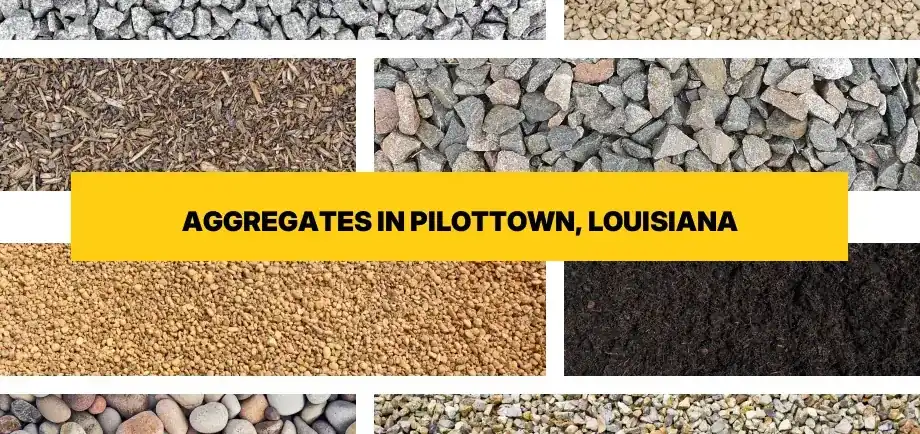
Shop Sand, Stone & Gravel in Pilottown, Louisiana
Local Topsoil, Dirt, Sand, Rocks and Gravel near me in Pilottown, Louisiana
Shop Aggregates for Delivery in Pilottown
Order online for free delivery to any Pilottown address.


Gravel Monkey provides premium aggregate delivery to Pilottown, Louisiana, serving one of the most remote and unique communities in the United States. Located at the extreme southern tip of Plaquemines Parish where the Mississippi River meets the Gulf of Mexico, Pilottown presents distinctive challenges for construction and infrastructure projects. Our comprehensive selection of gravel, crushed stone, and specialty aggregates is engineered to withstand the demanding coastal environment, high water tables, and soft deltaic soils characteristic of this Mississippi River Delta location. We deliver quality materials directly to your project site with absolutely free delivery, supporting the resilient community that calls this remote river mouth home.
Comprehensive Aggregate Selection for Pilottown Projects
Pilottown's position at the mouth of the Mississippi River creates extraordinary construction challenges. The soft alluvial soils, constant moisture, and exposure to both river and saltwater conditions demand aggregates specifically suited for coastal delta environments. Gravel Monkey supplies the full range of materials needed for successful projects in this unique Louisiana location:
- Driveway Gravel - Stable surface material engineered for the soft soils common throughout the Mississippi River Delta
- 3/4 inch Crushed Stone - Versatile aggregate ideal for road foundations and structural base layers in coastal conditions
- #57 Stone - Popular drainage aggregate crucial for managing water in this low-lying river delta area
- Crusher Run - Compactable base material that provides stability despite challenging ground conditions
- Road Base - Heavy-duty foundation material essential for maintaining access roads in this remote location
- Drain Rock - Specialized aggregate for critical drainage systems in flood-prone areas
- Pea Gravel - Smooth aggregate for walkways and limited landscaping applications
- River Rock - Natural stone for erosion control and decorative applications
- Crushed Concrete - Economical recycled aggregate suitable for temporary roads and work areas
- Topsoil - Limited availability for raised bed gardens in this predominantly industrial community
- Fill Dirt - Essential for elevation and grading in this flood-vulnerable delta location
- Mason Sand - Fine sand for concrete mixing and construction mortar
- Washed Sand - Clean sand for specialized construction applications
- Decomposed Granite - Alternative pathway material for areas with managed drainage
Understanding Pilottown's Unique Geography and Soil Conditions
Pilottown occupies a truly extraordinary position in American geography. Situated approximately 75 miles southeast of New Orleans on the east bank of the Mississippi River's Southwest Pass, this small community serves as the headquarters for river pilots who guide massive vessels through the treacherous transition from river to open ocean. The settlement sits just miles from where the Mississippi River's 2,320-mile journey ends at the Gulf of Mexico, positioned on unstable deltaic deposits that the river has laid down over millennia.
The geological conditions in Pilottown present significant engineering challenges. The ground consists almost entirely of unconsolidated Holocene sediments - fine clay, silt, and organic matter deposited by the Mississippi River within the last 10,000 years. These soft alluvial soils offer minimal bearing capacity and experience ongoing subsidence as sediments compact under their own weight. The water table sits at or near the surface year-round, making drainage and foundation stability constant concerns for any construction project.
Pilottown experiences a humid subtropical climate with annual rainfall exceeding 60 inches. The area sits at elevations barely above sea level, typically ranging from zero to three feet, making it extremely vulnerable to storm surge, river flooding, and the gradual effects of coastal erosion and land loss. Average temperatures range from 54°F in January to 83°F in July, with high humidity creating a persistently damp environment that accelerates corrosion and degradation of structures. Hurricane season brings additional risks from June through November, requiring infrastructure designed to withstand extreme weather events.
Geological Considerations for Aggregate Use
The Mississippi River Delta's unconsolidated sediments mean that proper aggregate base construction is absolutely critical for any development in Pilottown. Unlike areas with stable bedrock or compacted glacial soils, the soft clays and silts here provide virtually no natural support. Construction projects require substantially thicker aggregate base layers - typically 50% to 100% more material than projects in areas with better soil conditions.
The deltaic geology also means that settlement and differential movement are ongoing concerns. Structures and roadways built on these soils require flexible designs that can accommodate gradual subsidence. Properly graded and compacted aggregate bases help distribute loads more evenly across the weak underlying soils, reducing the risk of catastrophic settlement or structural failure.
Critical Aggregate Applications in the Mississippi River Delta
Road and Access Surface Construction
Maintaining reliable road access in Pilottown presents unique challenges. The primary access road - Louisiana Highway 23 - terminates at Venice, requiring boat or helicopter access to reach Pilottown and the other downriver communities. Within the settlement, roads and work areas must be constructed on the soft delta soils using substantial aggregate bases to prevent rutting, settlement, and complete failure during wet periods.
For access roads and parking areas serving the pilot station, supply facilities, and residential structures, we recommend starting with a thick foundation layer. This typically involves a minimum eight to twelve inch base of well-graded aggregate that can be compacted to provide load-bearing capacity despite the weak underlying soil. The base layer should extend well beyond the edge of the finished surface to prevent edge failures and lateral spreading into the surrounding soft ground.
Top surfacing requires careful selection of materials that provide traction while allowing water drainage. The combination of river silt, frequent rain, and periodic storm surge means that proper drainage is essential to prevent surface deterioration. Angular aggregates that mechanically interlock perform better than rounded gravels in these conditions, providing stability even when saturated.
Drainage Infrastructure
Perhaps no application is more critical in Pilottown than proper drainage design and construction. With the water table at the surface and annual rainfall exceeding five feet, any low spot or poorly draining area quickly becomes a persistent pond or marsh. The challenge is compounded by the fact that there is virtually no natural elevation change to facilitate gravity drainage, and pumping may be required to move water toward the surrounding river or marsh.
Drainage systems in Pilottown typically employ large quantities of angular aggregate material to create subsurface channels that collect and convey water to discharge points. These drainage structures must be designed larger than in other locations to handle the extreme volumes of rainfall during tropical systems. The aggregates must also be carefully selected to resist the highly corrosive environment created by the combination of river water, saltwater intrusion, and organic acids from decaying vegetation.
For critical drainage applications, clean, angular crushed stone provides the best performance. The stone should be free of fines that could wash out or become clogged by the fine silts carried in the groundwater. Geotextile fabrics are typically used to separate the drainage aggregate from the surrounding clay soils, preventing clogging while still allowing water to enter the drainage structure.
Foundation Support Systems
Buildings in Pilottown must be constructed to withstand not only the soft soils but also the very real threat of hurricane-force winds and storm surge flooding. Most structures are elevated on pilings driven deep through the soft deltaic deposits to reach more stable sand and clay layers at depth. However, the area around and between pilings still requires careful aggregate fill and grading to provide access, prevent erosion, and maintain proper drainage away from structures.
Around building foundations, we typically recommend a substantial aggregate blanket that extends at least four feet beyond the building footprint. This aggregate layer serves multiple purposes: it provides a stable working platform during construction, reduces erosion and scour during flooding events, improves drainage away from the structure, and helps distribute any lateral loads from the building to the surrounding ground.
Selecting the Right Aggregates for Delta Conditions
Not all aggregates perform equally in Pilottown's challenging environment. Understanding the characteristics and appropriate applications of different materials helps ensure project success in this demanding location.
| Aggregate Type | Best Applications | Key Advantages | Delta Suitability |
|---|---|---|---|
| Crusher Run | Road bases, foundations, general fill | Excellent compaction, interlocking structure | Excellent - ideal for load-bearing applications |
| 3/4 inch Crushed Stone | Road surfacing, drainage layers, concrete aggregate | Versatile, drains well, readily available | Very Good - works in most applications |
| #57 Stone | Drainage systems, pipe bedding, concrete | Uniform size, excellent drainage | Excellent - critical for drainage infrastructure |
| Road Base | Heavy traffic areas, parking, permanent roads | Maximum stability, superior load distribution | Excellent - essential for infrastructure |
| Drain Rock | French drains, foundation drainage, sump systems | Optimal drainage, clean, washed | Excellent - necessary for water management |
| Crushed Concrete | Temporary roads, work pads, erosion control | Cost-effective, environmentally friendly | Good - suitable for temporary applications |
| Pea Gravel | Walkways, limited landscaping, small paths | Attractive appearance, comfortable to walk on | Fair - limited use due to instability on soft soil |
| River Rock | Erosion control, decorative applications | Natural appearance, resists displacement | Good - useful for erosion management |
Best Practices for Aggregate Installation in Pilottown
Successful aggregate projects in the Mississippi River Delta require techniques adapted to the unique local conditions. Standard construction methods developed for stable soils simply don't work when building on soft river deposits.
Site Preparation and Soil Stabilization
Before placing any aggregate material, the site must be properly prepared. This often begins with removing any organic surface layers - marsh grass, woody vegetation, or accumulated organic muck. In many areas of Pilottown, this organic layer can be several feet thick and must be completely excavated to reach mineral soil, even if that mineral soil is still quite soft.
For critical applications like road construction, geotextile stabilization fabric is essential. This fabric is placed directly on the prepared subgrade before any aggregate is placed. The fabric prevents the aggregate from punching down into the soft soil while still allowing water to drain through. Without this separation layer, even large quantities of aggregate will gradually sink into the mud, particularly under vehicle traffic or concentrated loads.
Aggregate Placement and Compaction
Placing aggregate on very soft soils requires a methodical approach. Initial lifts should be placed carefully to avoid disturbing the underlying soil. In extremely soft conditions, this may mean spreading material from the edge and working forward, allowing equipment to travel only on the newly placed aggregate rather than on the soft ground.
Compaction is both critical and challenging on delta soils. Standard vibratory compaction equipment can actually make conditions worse by liquefying the underlying soft clays. Instead, compaction should rely primarily on the weight of the aggregate itself and the traffic during construction. Static roller compaction or multiple passes of loaded trucks may be more effective than vibratory compactors in very soft conditions.
Aggregate should be placed in maximum eight-inch lifts (uncompacted thickness) and allowed to stabilize before adding additional layers. In some cases, placing a geogrid reinforcement between lifts can significantly improve the load-bearing capacity of the finished aggregate base, allowing thinner overall sections while still achieving the required performance.
Drainage Integration
Every aggregate installation in Pilottown must include comprehensive drainage provisions. Surface water must be directed away from work areas through crowned surfaces or cross-slopes. Subsurface drainage is equally important - perforated pipes surrounded by clean aggregate should be installed at strategic locations to intercept groundwater and prevent saturation of the aggregate base.
Given the low elevations, drainage systems must often include pump stations to lift water to discharge elevations. These systems should be designed with redundancy, as drainage failure can quickly lead to complete loss of access and severe structural problems. The drainage aggregate surrounding collection pipes must be sized to prevent clogging by the fine silts present in the groundwater, typically requiring washed stone and proper filtration fabric.
Serving Pilottown and the Lower Mississippi River Communities
While Pilottown itself is a small community of fewer than twenty permanent residents, primarily river pilots and support staff, the area represents a critical link in America's maritime commerce. The river pilots based here guide cargo vessels carrying billions of dollars in goods through the challenging passage from the Mississippi River to the open Gulf of Mexico. Supporting this vital function requires reliable infrastructure despite the extreme environmental challenges.
Our aggregate delivery service extends throughout this remote region, supporting not only Pilottown but also nearby communities and facilities along the lower river. Venice, located about 12 miles upriver, serves as the primary supply point for lower Plaquemines Parish. Port Eads, at the mouth of South Pass, and the various oil and gas facilities scattered across the delta also require quality aggregates for infrastructure maintenance and development.
The entire lower delta region faces similar challenges: soft soils, high water tables, limited access, and vulnerability to tropical storms. We understand these conditions and supply materials specifically selected for successful performance in this demanding environment. Our experience serving Gulf Coast and delta communities means we can recommend the right products and quantities for your specific application.
Logistical Considerations
Delivering aggregates to Pilottown requires careful planning and coordination. While some materials may arrive by barge via the Mississippi River, most deliveries must be coordinated with the limited access routes available. We work closely with customers to schedule deliveries that align with project needs and access constraints, ensuring materials arrive when and where they're needed.
The remote location and challenging conditions make proper material selection even more critical. Transportation costs to this distant location are significant, and having materials that perform correctly the first time is essential. We help customers specify the right products and quantities to avoid the costly delays and complications that would result from inadequate or inappropriate materials.
Environmental Considerations and Coastal Erosion
Pilottown sits at the epicenter of Louisiana's coastal land loss crisis. The Mississippi River Delta is losing land at an alarming rate - approximately 25 square miles per year across coastal Louisiana. This land loss results from multiple factors: sediment starvation due to upstream flood control and river engineering, subsidence of deltaic deposits, saltwater intrusion, and relative sea level rise estimated at nearly one foot per century in this region.
For construction projects in Pilottown, this ongoing land loss creates additional challenges. Structures built just decades ago may now be much closer to open water than originally designed. Erosion threatens roads, utilities, and buildings. Aggregate materials play an important role in erosion control, providing armoring along vulnerable shorelines and creating stable platforms that resist scour and wave action.
Environmental regulations in coastal Louisiana are increasingly stringent, particularly regarding activities that might affect wetlands or water quality. Any project using aggregates near waters must consider potential impacts from turbidity, changes in hydrology, or habitat disturbance. We can help customers understand these requirements and select materials that meet both performance needs and environmental compliance obligations.
Hurricane Preparedness and Resilience
Hurricane risk is an inescapable reality in Pilottown. The community has experienced direct impacts from numerous major hurricanes, including Katrina (2005), Rita (2005), Gustav (2008), and Ida (2021). Each storm brings powerful winds, torrential rain, and devastating storm surge that can completely inundate the low-lying delta.
Aggregates contribute to hurricane resilience in several ways. Proper drainage infrastructure helps areas recover quickly after storms by efficiently removing floodwater. Elevated and well-founded access roads allow emergency responders and repair crews to reach affected areas more quickly. Erosion control using appropriate stone materials protects critical infrastructure from scour damage during storm surge events.
When planning projects in Pilottown, consideration should be given to materials and designs that can withstand or quickly recover from hurricane impacts. This might include selecting larger, heavier aggregates that resist displacement, designing drainage systems with excess capacity for extreme rainfall events, and creating elevated work platforms that remain accessible even during minor flooding.
Specialty Applications and Alternative Materials
While most aggregate use in Pilottown focuses on essential infrastructure, there are occasional needs for specialty materials and alternative applications. The limited landscaping that exists in this industrial community may utilize walkway gravel for paths between buildings or playground sand for recreational areas serving pilot families.
These specialty materials must still account for the challenging environment. Walkway surfaces may require edging or borders to prevent aggregate from migrating into surrounding soft soil. Sand areas need excellent drainage and may require more frequent maintenance due to the tendency of fine materials to mix with underlying clays or wash away during heavy rains.
For some applications, alternatives to traditional stone aggregates may be considered. Crushed seashells, abundant in coastal Louisiana, can provide attractive and functional surfacing for paths or decorative areas. However, shells break down relatively quickly in the acidic delta environment and may require more frequent replacement than harder stone materials.
Frequently Asked Questions About Aggregates in Pilottown
We deliver driveway gravel, crushed stone in various sizes, #57 stone, crusher run, road base, drain rock, pea gravel, river rock, recycled concrete, topsoil, fill dirt, mason sand, washed sand, and decomposed granite throughout Pilottown and the surrounding Mississippi River Delta region.
Yes! Gravel Monkey offers FREE delivery to Pilottown and the surrounding Plaquemines Parish area for all gravel and aggregate orders.
Pilottown sits at the mouth of the Mississippi River in a low-lying coastal area with high water tables and frequent flooding. Proper drainage using materials like drain rock and crushed stone is essential to prevent water accumulation and structural damage to buildings and roads.
For Pilottown's coastal conditions, we recommend crushed stone, crusher run, and road base for their compaction and stability. These aggregates resist erosion and provide solid foundations despite the area's high humidity, saltwater exposure, and soft deltaic soils.
Yes, we serve Pilottown and the surrounding Mississippi River Delta communities. Due to the unique access considerations in this remote coastal location, contact us to confirm delivery arrangements for your specific project site.
The amount depends on your project size and the soft deltaic soils common in Pilottown. For roads and driveways, we typically recommend four to six inches of compacted base material due to the challenging ground conditions. Our team can help calculate the precise amount for your property.
Pilottown sits on soft Mississippi River delta sediments composed primarily of clay and silt deposits. These unconsolidated soils have poor bearing capacity and high water content, making proper aggregate base construction critical for any building or roadway project in the area.
Hurricane storm surge can temporarily submerge the entire Pilottown area. Properly installed aggregate bases with adequate thickness and compaction are more likely to survive inundation intact. Using heavier materials and proper drainage helps structures recover quickly after storms pass and floodwaters recede.
Professional Aggregate Delivery to Pilottown and the Mississippi River Delta
Gravel Monkey understands the exceptional challenges of construction and infrastructure maintenance in Pilottown and the lower Mississippi River Delta. We supply the quality aggregates essential for successful projects in this demanding environment, backed by knowledge of coastal conditions and soft soil construction techniques. Our free delivery service brings materials directly to your remote project location, supporting the critical maritime operations and resilient community at the mouth of America's greatest river.
Whether you're maintaining access roads for the river pilot station, constructing drainage systems to manage persistent flooding, building elevated foundations to withstand storm surge, or protecting shorelines from ongoing erosion, we have the right aggregates for your application. Contact Gravel Monkey today to discuss your project needs and receive expert recommendations for materials that will perform reliably in Pilottown's unique Mississippi River Delta environment.

Need help? Reach out for a quote: