2″-3″ Crushed Concrete
From $625.00
Supplied locally near you
“Seamless shopping, from click to delivery—never knew it could be so straightforward.”
- Free Dump Truck Delivery Service
- Unmatched Value: Premium Quality at Competitive Prices
- Consistent, On-Time Delivery to Your Neighborhood



Crushed Concrete Calculator
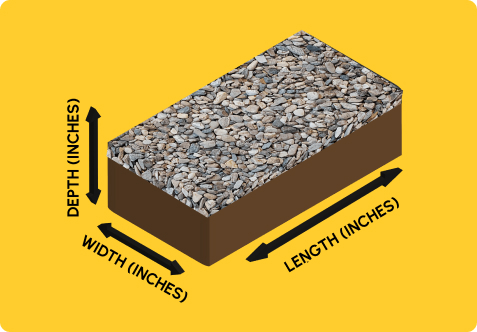
Enter your project dimensions to estimate how much crushed concrete you will need.
Specification Information
Gravel Monkey recommends:
- Orders of 4 tons or under – increase your estimated needed amount by 20%.
- Orders over 4 tons – increase your estimated needed amount by 10%.
2″-3″ crushed concrete is a recycled aggregate engineered for strength, drainage, and long-term resilience. It’s a cost-effective, eco-friendly option for heavy-duty landscaping and construction projects.
“A rugged, sustainable material that combines structural reliability with smart recycling value.”
Quantity Calculator
Use our project calculator to determine how much 2″-3″ crushed concrete you’ll need. Input the length, width, and depth of your project area. For accuracy, order an additional 10-15% to account for compaction and contour shaping during installation.
2″-3″ Crushed Concrete: What You Need to Know
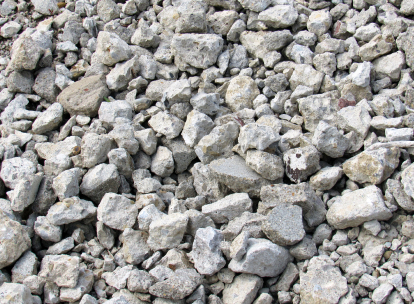
This material is made by processing demolished concrete into angular, interlocking pieces between two and three inches in diameter. The result is a large, heavy-duty recycled aggregate that performs much like quarry stone but with the added sustainability of reusing existing material.
Unlike smaller aggregates, 2″-3″ crushed concrete is less about walking comfort and more about structural stability, drainage, and erosion control. It has the size and weight to resist shifting under heavy loads, while its porous structure allows water to move freely through voids.
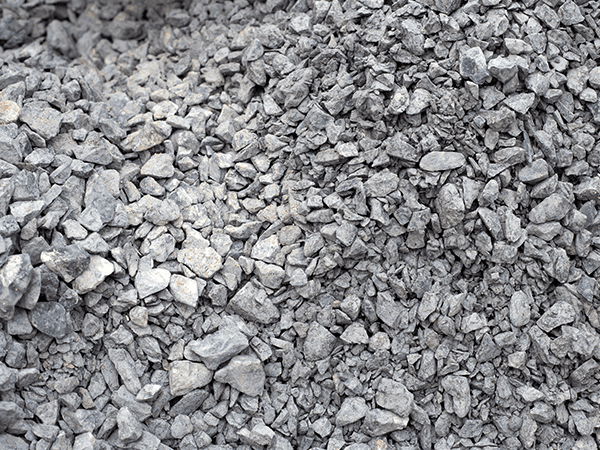
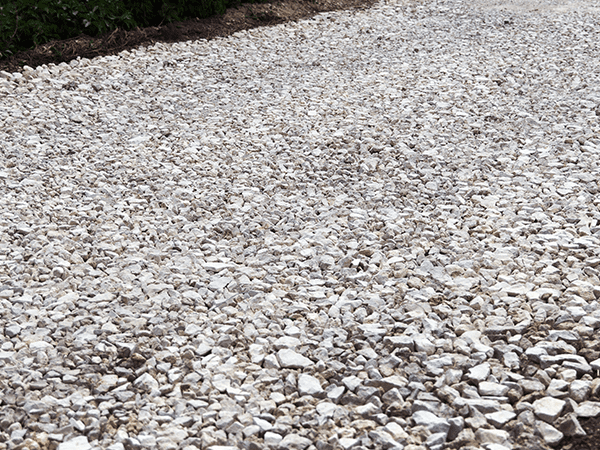
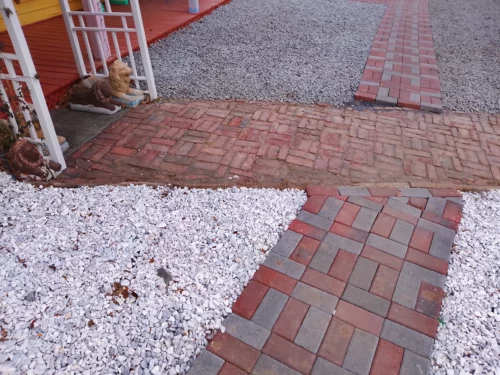
Color tones are typically light gray to off-white, with occasional inclusions of stone or brick fragments that add a rugged, utilitarian look.
Why It Works for You: Applications & Versatility
- Construction Access Roads – Creates a durable surface for trucks, trailers, and equipment traffic.
- Heavy-Duty Walkways & Trails – Ideal for utility access paths, estate lanes, and rustic trails.
- Erosion Control – Large, weighty pieces help stabilize slopes, swales, and ditches.
- Drainage Systems – Provides void space for water flow in culverts, French drains, and stormwater channels.
- Retaining Wall Backfill – Reduces hydrostatic pressure while promoting drainage behind structures.
- Temporary Work Pads – Forms strong, quick-to-install surfaces for construction sites or storage areas.
- Base for Large Pads & Slabs – A solid foundation under barns, sheds, or industrial pads.
Key Benefits of 2″-3″ Crushed Concrete
- Sustainable Choice – Made from recycled concrete, reducing landfill waste and conserving natural resources.
- Strong & Stable – Large, angular fragments interlock tightly under compaction, resisting rutting or shifting.
- Excellent Drainage – Large voids between pieces allow water to pass freely, preventing pooling or frost heave.
- Erosion Resistance – Heavy size keeps it anchored in place on slopes and drainage channels.
- Budget-Friendly – Often 30-50% less expensive than virgin stone, while delivering comparable performance.
- Low Maintenance – Once compacted, it requires minimal top-ups and stays put for years.
Installation Know-How: Step by Step
- Excavate & Prep
Remove vegetation, topsoil, and soft material until you reach firm subgrade. Grade gently away from structures for drainage. - Install Edging
Strong timber, steel, or stone edging prevents migration and defines clean project boundaries. - Apply Geotextile (Optional)
A separation fabric reduces mixing with soil and extends long-term performance. - Spread in Lifts
Place in layers of 3-4 inches. Level each lift before compacting. - Compact Thoroughly
Use a vibratory roller or plate compactor to lock the large fragments together. - Final Grading
Maintain a crown or slope of about ¼″ per foot to encourage proper water runoff.
Common Mistakes to Avoid
- Skipping Compaction – Even large concrete pieces need compaction for long-term stability.
- Flat Grading – Without slope, water will pool and weaken the surface.
- Using Too Thin a Layer – Less than 4″ depth won’t deliver the load-bearing strength required.
- Neglecting Edge Restraints – Without borders, large pieces migrate into adjacent areas.
- Poor Material Screening – Always source from reputable suppliers to avoid excess contaminants.
Long-Term Maintenance Tips
- Rake & Regrade Seasonally – Smooth out dips or displaced stones after storms or heavy use.
- Top-Off Every Few Years – Add a thin layer of fresh crushed concrete to restore depth and surface profile.
- Inspect Drainage – After major rains, check that water is moving freely and not undermining edges.
- Edge & Weed Control – Keep borders intact and manage weed growth for a clean, professional finish.
- Winter Care – Raise plow blades slightly to avoid scattering aggregate during snow removal.
Comparing 2″-3″ Crushed Concrete to Other Materials
| Material Type | Strength & Load | Drainage | Comfort Underfoot | Maintenance | Visual Style |
| 2″-3″ Crushed Concrete | Excellent | Excellent | Coarse, rugged | Low | Industrial, rustic |
| 2″-3″ Crushed Gravel | Excellent | Excellent | Coarse, rugged | Low | Natural, bold |
| 1″-1½″ Crushed Concrete | High | Excellent | Moderate comfort | Low | Neutral, utilitarian |
| Pea Gravel (Rounded) | Low | Moderate | Comfortable | Higher | Decorative, casual |
| Concrete or Pavers | Very High | Poor | Smooth | Medium | Formal, polished |
| Decomposed Granite (DG) | Moderate | Good | Smooth, earthy | Moderate | Soft, rustic |
Expert Tips
- Use as a Base Layer – Pair with smaller gravel or DG on top for a smoother walking finish.
- Match Project Scale – Best for heavy-duty applications; for garden paths, consider smaller aggregate.
- Order Extra – Large fragments settle more than fine gravel, so order at least 10% extra.
- Plan for Drainage – On slopes, add check dams or edging to hold aggregate in place.
- Choose Reputable Supply – Ensure crushed concrete has been properly screened and cleaned.
Final Word: Why 2″-3″ Crushed Concrete Stands Out
2″-3″ crushed concrete is a rugged, sustainable, and cost-efficient aggregate built for strength and drainage. Whether stabilizing a worksite, controlling erosion, or creating a rustic access path, it delivers long-term durability with the added advantage of recycling.
With proper installation and minimal upkeep, this material stands up to heavy use, seasonal weather, and demanding conditions — all while helping the environment and saving costs.

I had never ordered gravel before so I was a little anxious but they made it really easy and had great customer service! Super easy to book online and I was able to get quick answers to some questions I had over email too. The delivery was seamless to our rural area and at a good price.
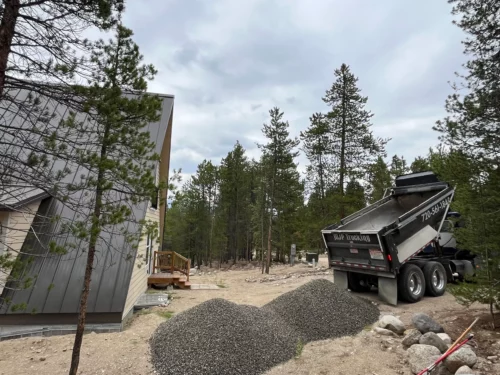
Gravel Monkey is a superb service for your gravel needs. They offer 2 day delivery scheduled on short notice, and they are quick to get your materials out the door on the delivery day. Customer support is also very helpful. Thanks Gravel Monkey!
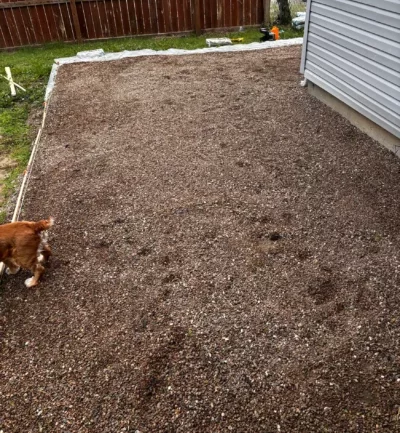
Gravel Monkey made the entire process quick and smooth from start to finish. Their online calculator was especially helpful, it took the guesswork out of determining how much material I needed, and saved me a lot of time. The ordering process was straightforward, and everything was handled efficiently. I highly recommend Gravel Monkey for anyone looking for a hassle-free experience and great customer service.
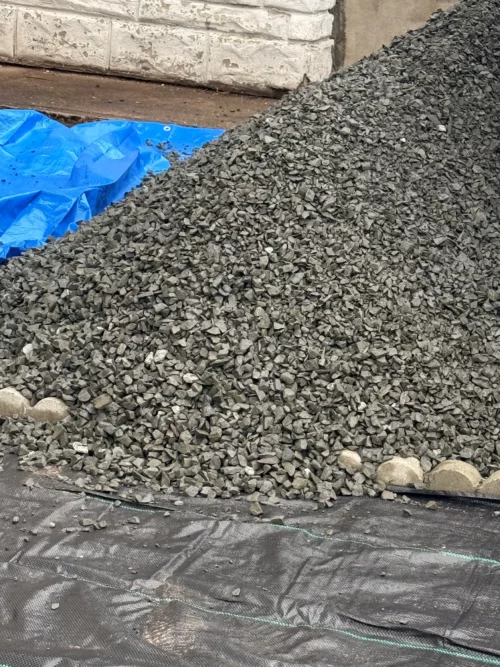
Gravel Monkey had quick turnaround and the local delivery team was very accommodating. The entire process was smooth. Thank you.
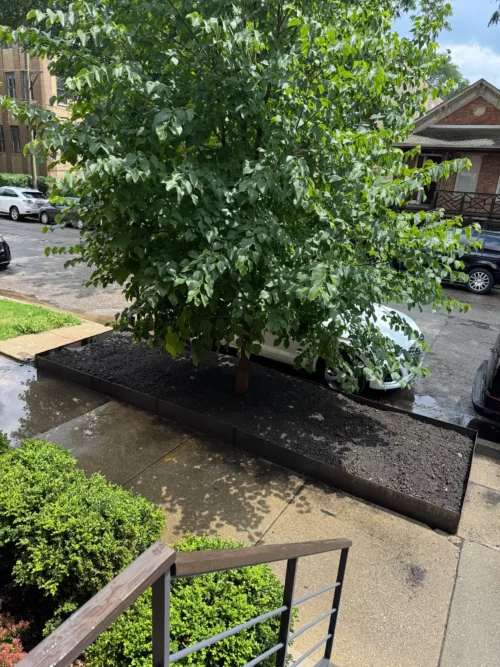
Great prices! Great communication! Fast delivery! Driver put the sand where I asked and it was challenging but he did it like a pro! Super smooth online purchase! Thanks!
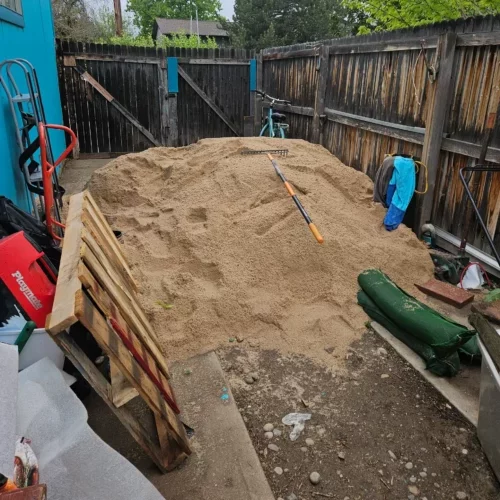
Gravel Monkey has the greatest customer service skills people. Very kind and make accommodation to your needs. Delivery fast and simple.
How much does a yard of crushed concrete weigh?
A cubic yard of crushed concrete typically weighs 2,400 – 2,800 pounds (about 1.2 – 1.4 tons). Weight varies based on moisture, density, and how finely the material is processed. It’s slightly lighter than natural crushed stone because concrete contains air pockets and cement paste.
What size crushed stone goes under a concrete slab?
The best material under a concrete slab is ¾″ clean crushed stone. Its angular shape provides strong support while allowing water to drain, reducing the risk of frost heave and slab shifting. Avoid “minus” products with fines they can trap moisture.
Where can I buy crushed concrete near me?
You can order crushed concrete delivered via dump truck directly from Gravel Monkey, delivered to your home or job site. Simply enter your ZIP code on the product page to confirm availability and choose your delivery date no quarry trips or truck rentals required.
Is crushed concrete good for driveways?
Yes, crushed concrete performs very well for driveways, farm lanes, and parking pads. It compacts tightly, drains efficiently, and offers excellent load-bearing strength. It’s also significantly more affordable than virgin aggregates and is eco-friendly. Many homeowners use it as a base topped with finer gravel.
Will crushed concrete harden?
Crushed concrete does not fully harden like fresh concrete, but it does bind and tighten as it compacts. Residual cement paste helps it firm up more than natural stone, giving it a very stable base. It won’t become a solid slab, but it will become dense and durable over time.
What is crushed concrete used for?
Crushed concrete is used for driveway bases, road foundations, drainage layers, retaining-wall backfill, temporary construction pads, and erosion control. It’s also used as a structural fill or blended into new concrete mixes as a recycled aggregate. Its affordability and strength make it ideal for both residential and commercial projects.
Is crushed concrete environmentally friendly?
Yes. Crushed concrete is a recycled aggregate, which reduces landfill waste and limits the need for mining new stone. It’s one of the most eco-friendly materials for driveways, bases, and drainage applications offering strong performance with a much lower environmental impact.
How much crushed concrete do I need?
Measure your project’s length × width × depth (in feet) and divide by 27 to get cubic yards. For tons, multiply cubic yards by 1.1 – 1.2, since crushed concrete is slightly lighter than natural stone. Driveways usually need 4 – 6 inches of base, while walkways and pads use 2 – 4 inches. Ordering an extra 10 – 20% helps account for compaction and grading.
What does crushed concrete look like?
Crushed concrete appears as gray or off-white angular pieces, usually mixed with fine particles from the original concrete. You may see small traces of brick or asphalt, depending on the source, but reputable suppliers screen it well. It looks similar to crushed stone but has a slightly lighter color and a more varied texture.
How many yards is 1 ton of crushed concrete?
Because crushed concrete weighs about 2,400 – 2,800 lbs per yard, one ton equals roughly 0.7 – 0.9 cubic yards. For quick estimating, most projects use 1 ton ≈ 0.75 cubic yards. Moisture and compaction levels can slightly change the exact volume.