Florida Aggregate Guide: Limerock, Shell and Drainage in Sandy Soil
Florida flips the usual gravel problem upside down. Most regions fight soil that holds too much water and drains too slowly. Florida sand does the opposite: it drains almost instantly and still won’t support a driveway or patio base on its own. Choosing gravel in Florida means working with that sandy, porous ground instead of against it, and picking material based on whether you’re building a base, a drainage system, or a decorative surface.
- Limerock, not river gravel, is Florida’s standard compacted base material for driveways and roads.
- Crushed shell gives a decorative, driveway-ready surface with a coastal look but less load capacity than limerock.
- Washed river rock, 57 stone, and drain rock handle Florida’s real drainage problem: heavy rain over saturated ground.
- A high water table, common across most of the state, calls for shallower, wider French drains and dry wells.
- Hurricane season rainfall needs oversized drainage capacity built in from the start.
- Coastal salt air shortens the life of metal edging and cheap landscape fabric.
Why Sandy Soil Changes the Rules for Gravel in Florida
Florida’s native sand drains water almost as fast as it falls, which sounds useful until it needs to hold a driveway shape under vehicle weight. Sand grains are rounded and uniform, so they shift and rut under load instead of locking together like angular crushed stone does. A straight layer of sand fails as a base almost everywhere in the state. Gravel in Florida has to solve two problems at once: keep water moving through ground that already drains fast, and provide a load-bearing surface the native soil can’t.
Limerock: Florida’s Standard Base for Gravel Projects
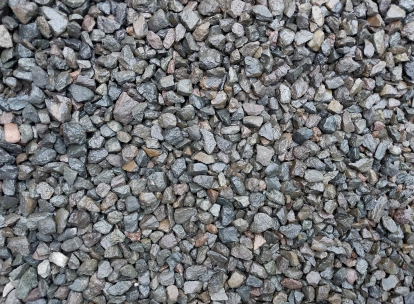
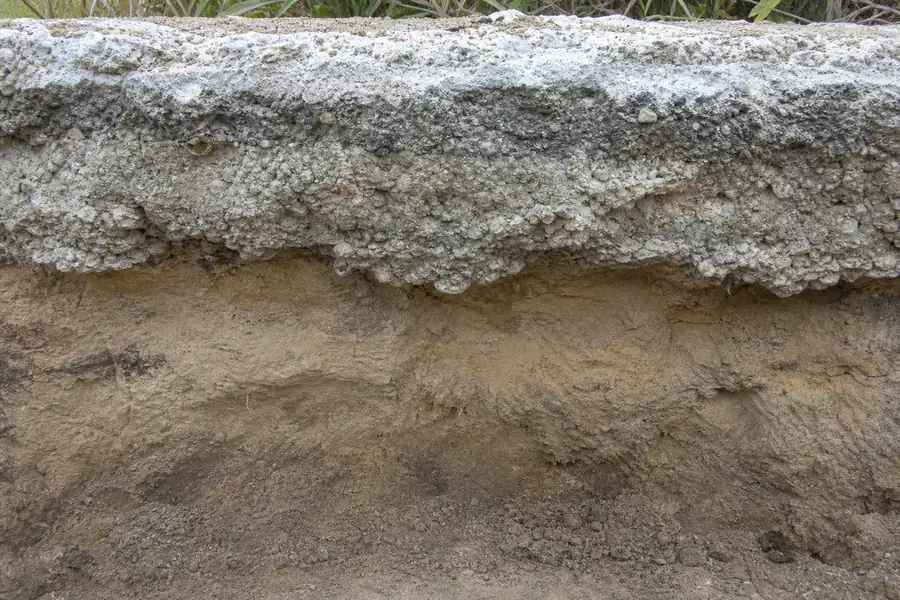
Limerock is the compacted base material under most Florida driveways, roads, and parking areas, made from crushed limestone that’s abundant and inexpensive across the state. Compacted in lifts, it locks together tightly enough to carry vehicle loads even over sandy subgrade, which is why Florida DOT specs call for it under asphalt and most residential contractors default to it too. It functions as a base layer, the same role crusher run or road base plays elsewhere, not as a decorative surface. Skipping a proper limerock base and pouring decorative stone straight onto sand is one of the fastest ways to end up with a driveway that sinks and ruts within a year.
Crushed Shell as a Coastal Alternative to Standard Gravel in Florida
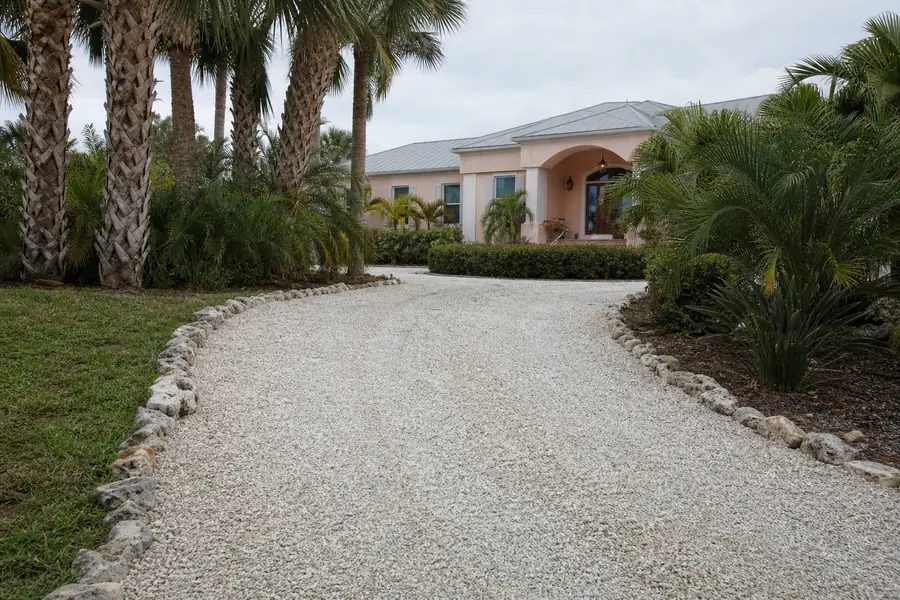
Crushed shell is a common substitute for traditional gravel in Florida, especially along the coast where it’s locally available and matches the region’s look. It compacts reasonably well for driveways and walkways over a proper base, though it isn’t as load-bearing as crushed limestone and breaks down faster under heavy traffic. Crushed shell driveways are common in older Florida neighborhoods and beach towns, where the pale surface suits the setting better than gray crushed stone. For a shell look with more durability, a thin layer of crushed shell over a compacted limerock base delivers both.
Best Drainage Gravel for Florida: River Rock, 57 Stone and Drain Rock
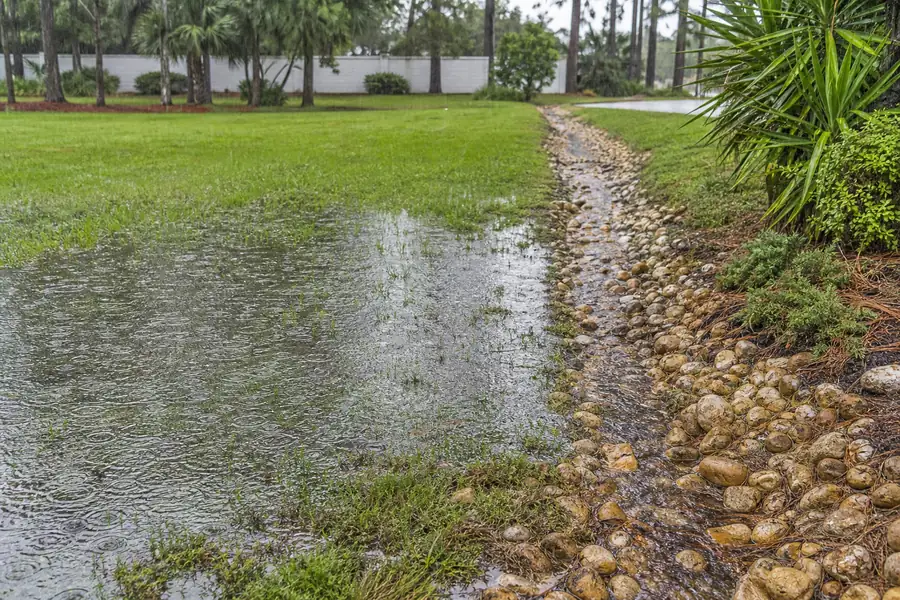
Florida’s real drainage problem isn’t slow-draining soil, it’s managing heavy rainfall over ground that’s already saturated much of the year. Washed river rock and 57 crushed stone are the two workhorses for French drains, downspout beds, and drainage swales, because their washed surfaces stay open to water flow instead of clogging with fines. Drain rock, a clean, washed aggregate sized to maximize void space between stones, is the standard fill for perforated pipe trenches and dry wells statewide. Sizing the stone wrong is one of the most common drainage mistakes, and our guide to what size gravel works best for drainage breaks down which size fits which system.
How a High Water Table Changes French Drain and Dry Well Design
Florida’s water table sits just a few feet below grade across much of the state, changing how drainage systems have to be built compared to northern climates. A French drain, a gravel-filled trench with a perforated pipe that redirects groundwater away from a structure, only works if there’s somewhere lower for the water to go. When the water table is high, that trench can sit in standing groundwater for weeks after a storm instead of draining freely. Dry wells face the same limit: dig one too deep in South Florida or coastal Tampa and it fills with groundwater instead of absorbing runoff. The fix is shallower, wider systems that rely on surface area and gravity flow rather than depth, backed by a thick layer of drain rock to keep the void space open.
Hurricane Season and Coastal Salt: Two Extra Factors for Gravel in Florida
Planning for Hurricane-Season Rainfall
Florida’s rainy season and hurricane season overlap from June through November, dropping several inches of rain in a single afternoon on ground that’s often already saturated. Gravel beds, dry wells, and swales sized for average rainfall get overwhelmed fast, so Florida installations need extra capacity built in from the start rather than added after the first flood. Oversizing the drainage bed and adding a second overflow path, such as a swale or backup dry well, keeps water moving even when a storm exceeds normal design numbers.
Protecting Edging and Fabric From Salt Air
Salt air corrodes untreated metal edging within a few years along most of Florida’s coastline, so steel edging that holds up fine inland rusts through much faster near Tampa, Jacksonville, or any spot within a few miles of saltwater. Aluminum or plastic edging holds up better in those zones. The same salt and UV exposure breaks down cheap woven landscape fabric faster too, so a heavier, UV-stabilized geotextile fabric, a permeable barrier that keeps gravel from mixing into the soil beneath it, is worth the cost on any coastal Florida project.
Gravel Picks by Region: Tampa, Orlando, Jacksonville and South Florida
Gravel needs shift by region even though sandy soil covers most of the state. Anyone sourcing gravel in Florida through Gravel Monkey’s Florida service area should factor in local water tables and rainfall patterns, not just soil type.
| Region | Key Condition | Recommended Approach |
|---|---|---|
| Tampa | High water table, coastal salt | Limerock base, drain rock drainage, aluminum edging |
| Orlando | Sandy soil, moderate water table | Limerock base, 57 stone for drainage beds |
| Jacksonville | Higher rainfall, mixed sand-clay pockets | Crushed shell driveways, river rock drainage swales |
| South Florida | Very high water table, near sea level | Shallow, wide drain fields with drain rock, crushed shell accents |
Projects in Tampa especially benefit from planning drainage and edging together, since the combination of a high water table and salt exposure hits both systems at once.
FAQs
What is limerock and why does Florida use it under driveways?
Limerock is crushed limestone that compacts into a dense, load-bearing base layer, and Florida relies on it because it’s locally abundant and holds up under vehicle weight even over sandy subgrade. It sits below any decorative surface material and does the structural work a driveway actually depends on.
Is crushed shell as strong as gravel for a Florida driveway?
Crushed shell compacts well enough for driveways and walkways but isn’t as load-bearing as crushed limestone or crushed stone, and it breaks down faster under heavy or frequent vehicle traffic. It works best as a surface layer over a compacted limerock base rather than as the base itself.
Why does gravel sink into Florida sand?
Gravel sinks into sand because sand grains are rounded and don’t lock together, so anything laid directly on top shifts and settles under weight. A compacted base layer, typically limerock, gives the gravel above it something stable to sit on instead of gradually working its way down.
What size gravel works best for a French drain in Florida?
Most Florida French drains use washed drain rock or 57 stone, both sized to leave enough open space between stones for water to move freely without clogging. The right size depends on pipe diameter and expected water volume, covered in more detail in our guide to sizing drainage gravel.
Do I need landscape fabric under gravel in Florida?
Yes, in most cases, though coastal projects need a heavier, UV-stabilized fabric since standard landscape fabric breaks down faster in salt air and intense sun. Fabric keeps gravel from disappearing into the sandy soil below and cuts down on weed growth pushing up through the stone.