Frost Heave Driveway Guide: The Freeze-Thaw Cycle Explained
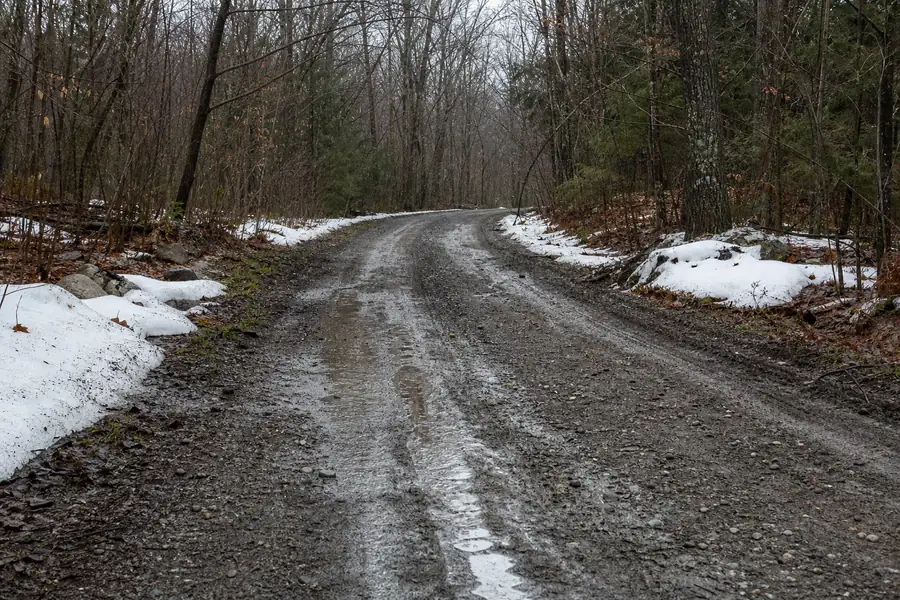
A gravel driveway that looked flat in December can crack, hump, and pothole by March. That’s frost heave: water in the fine particles below the surface freezes into layers of ice, and those layers expand and push the driveway up unevenly. When the ground thaws, the ice disappears and leaves a void, so the surface settles into a dip instead of springing back flat. Fixing a frost heave driveway isn’t about piling on more stone. It comes down to drainage and gradation, so water never sits still long enough to freeze in place.
- Frost heave happens when water in fine soil or base material freezes into ice lenses that expand and lift the driveway surface unevenly.
- Frost depth varies widely: it can reach 60 inches in the Upper Midwest, 30 to 48 inches in the Northeast, and up to 60 inches in parts of the Mountain West.
- Fines-heavy base material holds water and is the main driver of frost heave damage in cold climates.
- A layer of washed, open-graded stone below the base course drains meltwater instead of letting it collect and refreeze.
- A proper crown and working side ditches keep water off the driveway before it can soak in.
- Regrading after the ground fully thaws each spring stops small dips from turning into potholes.
What Causes Frost Heave in a Gravel Driveway
Frost heave starts below the surface, not on it. Water works into the fine particles in the base and the soil beneath it, and when temperatures drop, that water freezes into layers called ice lenses. Each lens draws in more moisture as it grows, and ice takes up about nine percent more space than water, so the lenses push everything above them upward.
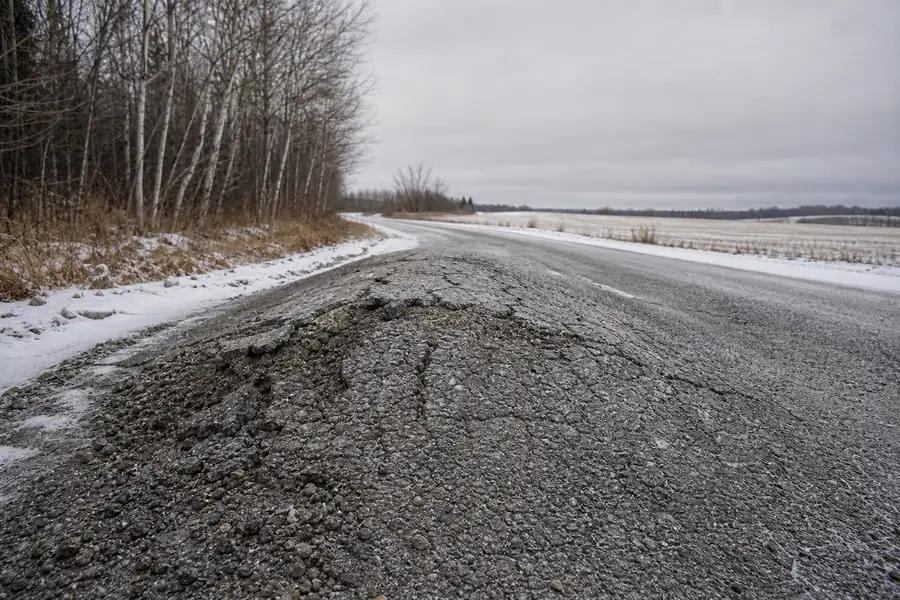
Soil moisture and particle size are never perfectly even, so the lift isn’t even either, which is what creates humps, cracks, and ridges after a hard freeze. Come spring, the ice melts from the bottom up and drains away, leaving loosened, saturated soil that can’t support the weight it did before winter. That’s why frost heave damage usually shows up as soft, spongy spots rather than a driveway that’s simply higher than before.
Frost Depth by Region: Midwest, Northeast, and Mountain West
Frost depth, the deepest point at which soil moisture freezes in a typical winter, is the single biggest variable in how bad frost heave gets. The deeper the frost line runs, the more of a driveway’s base sits inside the freeze zone and the more material is at risk of forming ice lenses.
| Region | Typical frost depth | Example city |
|---|---|---|
| Upper Midwest | 48-60 inches | Minneapolis, Minnesota |
| Northeast | 30-48 inches | East Stroudsburg, Pennsylvania |
| Mountain West | 36-60 inches | Kalispell, Montana |
In the Upper Midwest, a city like Minneapolis, Minnesota can see frost reach five feet down in a hard winter, deep enough to affect a driveway’s entire base if it’s built too thin. In the Northeast, towns like East Stroudsburg, Pennsylvania cycle through more freeze-thaw swings each season since temperatures hover near freezing for weeks at a stretch. Mountain West towns see frost depth swing with elevation and snow cover, since snow itself insulates the ground. The base needs to resist saturation down to roughly that depth, which is one reason how deep a gravel driveway’s base should be matters more here than almost anywhere else.
Why Fines-Heavy Base Material Fuels Frost Heave in Cold Climates
Fines, the silt and clay particles smaller than a grain of sand, are the main fuel for frost heave. They hold water through capillary action, wicking moisture upward even when the surface looks dry. A base material packed with fines acts like a sponge sitting right where frost does the most damage.
Crusher run, a compacted mix of crushed stone and stone dust, works well as a driveway base in most climates because those fines lock the material together. But the same fines that make crusher run compact so tightly also hold the water that feeds ice lenses. That’s the trade-off in freeze-thaw country: a fines-heavy base compacts tighter and costs less, but it’s the material most likely to heave when winter hits hard.
How Washed, Open-Graded Stone Stops Frost Heave
Washed, open-graded stone stops frost heave by giving water somewhere to go instead of sitting still and freezing. Open-graded means the stone is a single size with no stone dust mixed in, so the gaps between each piece let water drain through by gravity rather than cling to fine particles.
A layer of drain rock placed below the compacted base course creates a capillary break, a layer coarse enough that water can’t wick upward into the base the way it does through fine material. Contractors in freeze-thaw climates usually pair that drain layer with a geotextile fabric, a permeable barrier that keeps the drain rock separated from the subgrade soil so fines don’t migrate up and clog the drainage over time.
Crown and Side Ditches for a Frost-Resistant Gravel Driveway
A proper crown, the gentle high point running down the center of the driveway that slopes toward each edge, keeps meltwater moving off the surface instead of soaking in. Most gravel driveways need a crown of roughly 2 to 4 percent, about a quarter to a half inch of drop per foot of width.
Without a crown, water pools in ruts and low spots, then freezes overnight and forms new ice lenses right where traffic already stresses the surface. Side ditches carry that shed water away from the edges instead of letting it collect and resaturate the base from the sides. Skipping the ditches is a common mistake: even a well-crowned driveway resaturates at the edges if water has nowhere to run once it leaves the surface.
Spring Regrade Schedule for a Frost Heave Driveway
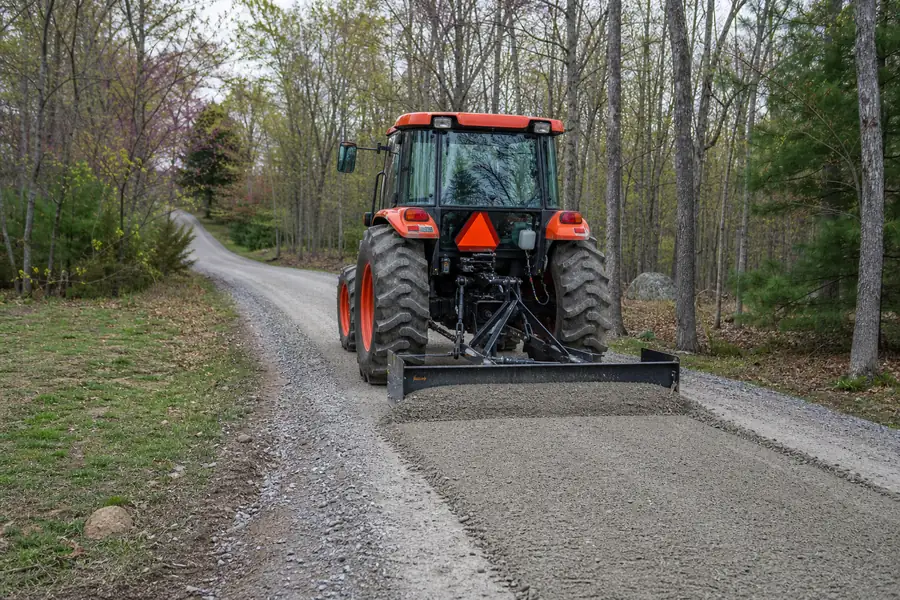
The best time to fix frost heave damage is after the ground fully thaws, not while it’s still soft. Regrading too early, while the base is saturated from meltwater, just pushes soupy material around instead of restoring a solid surface.
| Season | Task |
|---|---|
| Fall | Clear debris, check the crown, top up worn stone before the ground freezes |
| Winter | Watch for heaving or soft spots; keep heavy vehicles off visibly lifted sections |
| Early spring (thaw) | Let the base fully drain and firm up before doing any grading work |
| Late spring | Regrade, refill low spots and voids, re-establish the crown |
Sticking to that cycle every year keeps small dips from turning into potholes that need a full rebuild. Gravel Monkey’s gravel driveway maintenance guide covers the regrading and top-up steps in more detail.
FAQs
What is frost heave in a gravel driveway?
Frost heave is the upward lifting of a driveway’s surface caused by ice lenses forming in wet, fine-grained soil or base material as it freezes. The ice expands and pushes the surface up unevenly, then leaves a soft, sunken spot once it melts in spring.
How deep does frost go in freeze-thaw climates?
Frost depth typically runs 48 to 60 inches in the Upper Midwest, 30 to 48 inches across the Northeast, and 36 to 60 inches in the Mountain West depending on elevation and snow cover. A snowy winter can actually freeze the ground less deeply than a cold, bare one, since snow acts as insulation.
Can you stop frost heave without tearing out the whole driveway?
Yes, in most cases. Adding a layer of washed, open-graded stone beneath the existing base, correcting the crown, and clearing the side ditches usually resolves ongoing frost heave without a full rebuild.
What gravel base is best for a driveway in freeze-thaw country?
A base with minimal fines paired with a washed drain layer underneath performs best in freeze-thaw regions, since it lets meltwater drain instead of collecting and refreezing. Fines-heavy materials that compact well in mild climates tend to hold too much water once winter sets in hard.
When should I regrade my gravel driveway after winter?
Wait until the ground has fully thawed and the base has had a chance to drain and firm up, usually a few weeks after the last hard freeze. Regrading while the base is still saturated just moves soft material around instead of fixing the problem.